Daniel Webster Quotes
On the diffusion of education among the people rest the preservation and perpetuation of our free institutions.
Webster, Daniel. "Speech at Madison, Indiana." The Works of Daniel Webster, Vol. 1, Charles C. Little and James Brown, 1851, p. 403.


“Societies” were volunteer community associations formed for the purpose of monitoring the public officials and legislatures and recommending things. They would invite speakers and exchange political knowledge. They performed many of the functions that think tanks and local political parties do in modern times, but generally they were totally non-partisan—hence they were “disinterested”.


The President with Secretary of State, Thomas Jefferson, and several members of Congress, came to Brown to get ideas of how colleges should operate as there were very few colleges in America, and more were needed. Note the classic language of political flattery. Washington was really polished as “retail” politician as this quotation demonstrates.

Most Americans know relatively little about civics and the operations of government at all levels. Required courses and curricula units in the schools have been dropped in the last 40 years as there has been more concentration on test scores and college preparation, neither of which require civics. The adult education in civics which was so common in the early 20th century have all but disappeared. For many Americans, TV is the only vehicle for civic learning, and those programs are not very popular.


Her call for education for personal responsibility is a real shock to many conservatives who identify Mrs. Roosevelt with the liberal left. But she made this a basic component of her belief structure and the Roosevelt Administration in 1942—long before it ever became part of the conservative program.
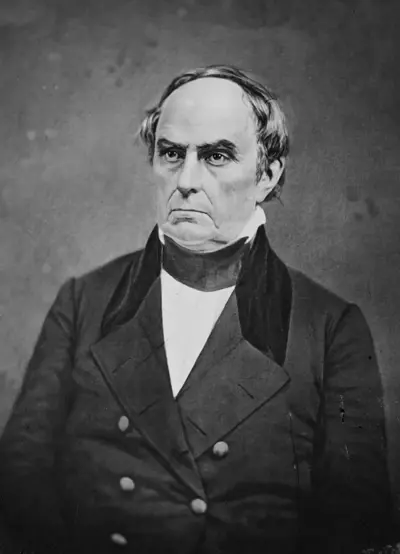
Daniel Webster was an American lawyer and statesman who represented New Hampshire and Massachusetts in the U.S. Congress and served as the U.S. Secretary of State under Presidents William Henry Harrison, John Tyler, and Millard Fillmore. As one of the most prominent American lawyers of the 19th century, he argued over 200 cases before the U.S. Supreme Court between 1814 and his death in 1852. During his life, he was a member of the Federalist Party, the National Republican Party, and the Whig Party.
