Thomas Moore Quotes
To place and power all public spirit tends, In place and power all public spirit ends; Like hardy plants, that love the air and sky, When out, 'twill thrive—but taken in, 'twill die!
Thomas Moore, 1779-1852, Irish Poet, Corruption
Sourced by: Eigen's Political and Historical Quotations


The President with Secretary of State, Thomas Jefferson, and several members of Congress, came to Brown to get ideas of how colleges should operate as there were very few colleges in America, and more were needed. Note the classic language of political flattery. Washington was really polished as “retail” politician as this quotation demonstrates.

“Societies” were volunteer community associations formed for the purpose of monitoring the public officials and legislatures and recommending things. They would invite speakers and exchange political knowledge. They performed many of the functions that think tanks and local political parties do in modern times, but generally they were totally non-partisan—hence they were “disinterested”.


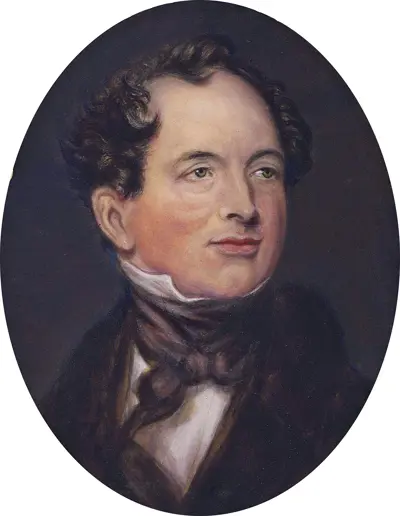
Thomas Moore was an Irish writer, poet and lyricist celebrated for his Irish Melodies. Their setting of English-language verse to old Irish tunes marked the transition in popular Irish culture from Irish to English. Politically, Moore was recognised in England as a press, or "squib", writer for the aristocratic Whigs; in Ireland he was accounted a Catholic patriot. Married to a Protestant actress and hailed as "Anacreon Moore" after the classical Greek composer of drinking songs and erotic verse, Moore did not profess religious piety. Yet in the controversies that surrounded Catholic Emancipation Moore was seen to defend the tradition of the Church in Ireland against both evangelising Protestants and uncompromising lay Catholics. Longer prose works reveal more radical sympathies. The Life and Death of Lord Edward Fitzgerald depicts the United Irish leader as a martyr in the cause of democratic reform. Complementing Maria Edgeworth's Castle Rackrent, Memoirs of Captain Rock is a saga, not of Anglo-Irish landowners, but of their exhausted tenants driven to the semi-insurrection of "Whiteboyism". Today, however, Moore is remembered almost alone either for his Irish Melodies (typically "The Minstrel Boy" and "The Last Rose of Summer") or, less generously, for the role he is thought to have played in the loss of the memoirs of his friend Lord Byron.
