John Stuart Mill Quotes
Among the foremost benefits of free government is that education of the intelligence and of the sentiments which is carried down to the very lowest ranks of the people when they are called to take a part in acts which directly affect the great interests of their country.
John Stuart Mill, 1806-1873, Member of Parliament, British Political Economist, Representative Government, 1861
Sourced by: Eigen's Political and Historical Quotations


Her call for education for personal responsibility is a real shock to many conservatives who identify Mrs. Roosevelt with the liberal left. But she made this a basic component of her belief structure and the Roosevelt Administration in 1942—long before it ever became part of the conservative program.


The Spanish colonization had been so exploitative that there was little of no infrastructure established in the Spanish colonies. Almost no institutions, no local government, existed, and there was no system of law or tolerance of minority views. Power controlled all and the Spanish (and Portuguese) were the power. When they were defeated, it was a bitter free for all in most cases unless there was a strong man and even they did not last long.
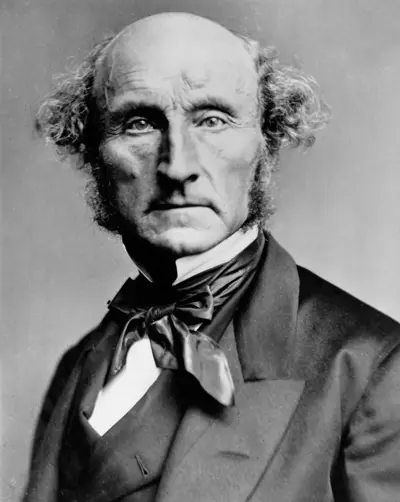
John Stuart Mill, usually cited as J. S. Mill, was an English philosopher, political economist, Member of Parliament, and civil servant. One of the most influential thinkers in the history of classical liberalism, he contributed widely to social theory, political theory, and political economy. Dubbed "the most influential English-speaking philosopher of the nineteenth century", he conceived of liberty as justifying the freedom of the individual in opposition to unlimited state and social control.
