Jonathan Boucher Quotes
Obedience to government is every man's duty, because it is every man's interest; but it is particularly incumbent on Christians, because (in addition to its moral fitness) it is enjoined by the positive commands of God; and, therefore, when Christians are disobedient to human ordinances, they are also disobedient to God. If the form of government under which the good providence of God has been pleased to place us be mild and free, it is our duty to enjoy it with gratitude and with thankfulness and, in particular, to be careful not to abuse it by licentiousness. If it be less indulgent and less liberal than in reason it ought to be, still it is our duty not to disturb and destroy the peace of the community by becoming refractory and rebellious subjects and resisting the ordinances of God.
This is the classic religious defense of the civil status quo regardless of reasonableness. This is a very similar view to that of Islam with respect to bad rulers. The Muslim is told to tolerate bad government unless the government is not supporting Islam.
Jonathan Boucher, 1738-1804, Maryland Anglican Minister & Loyalist, On Civil Liberty, Passive Obedience, And Nonresistance
Sourced by: Eigen's Political and Historical Quotations


Catherine II—the Great—appointed a commission to suggest model laws for Russia based on some of the principles of the European Enlightenment. The laws were never officially adopted but they are interesting in that they were the product of “liberal” thinking at the time.


The South had a tradition of lynching even before Reconstructon. Southern Leaders like Jefferson encouraged and justified the heinous practice. In the West there was a good bit of vigilantism justified by the fact that there was no functioning legal system and few law enforcement officers. But Jefferson and many other Southerners, although there was a law enforcement system except in the most rural areas, advocated lynching as a combination of vengeance and other emotions that are hard to identify.


Note that the two do NOT ALWAYS coincide. There are those who argue that law should be respected, right or wrong. There are also those who argue that law should be respected, only when it is in the right. Note also that “respect” and “obedience” are two different things. Some people argue that law and the courts and government must have respect. Others that they are only due obedience but not necessarily respect when they are in the wrong. Still others, like Thoreau, that obedience even is not required when the law is wrong. There are those who take this to the degree that obedience to a “wrong” law is wrong and there is a DUTY to disobey a wrong law. However, a more nuanced view does not treat all laws as the same importance. I may think a particular tax is unjust and wrong, but obedience does not necessarily have moral consequences. A law that says that people with a certain religion must not be hired, however, is sufficiently immoral that I am obliged to disobey it.


This is just the opposite of the American Democracy in which the government serves the citizens rather than the Fascist opposite notion.


This is a remarkable quotation. Because of the issue of plural marriage, many Americans regarded the early Mormons as having no respect for the country or its laws. However, as this quotation shows, the Mormon leader, prophet and founder specifically commanded his people to not only support the United States law but specifically mentions The Constitution. He told his followers that God approves of the United States constitution and states that it is in a sense universal, belonging to all mankind. There is no other religious founder who so thoroughly validated a national constitution and system in the history of the world. Yet he was assassinated and after his death, the United States Government was almost in a full scale war with the Mormons. There is still a vestige of anti-Mormonism in the United States among some Christian Fundamentalists. Yet the Mormon church has been a thoroughly American church, historically, conceptually, and philosophically It has even shared some of the American historical errors such as its sexism and discriminatory rules and view of Blacks. The latter has been remedied {625268} as the rest of America has changed, and the discriminatory role of women is very traditional and is shared with most other Christian fundamentalists and orthodox Jews.
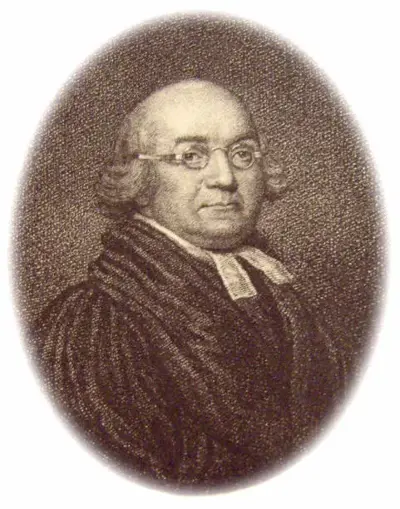
Rev. Jonathan Boucher (pronounced Boo-Shay), FRSE, FSA was an English clergyman, teacher, preacher and philologist.
