Benjamin N. Cardozo Quotes
As in the days of Edward I, the citizenry may be called upon to enforce the justice of the state, not faintly and with lagging steps but honestly and bravely and with whatever implements and facilities are convenient and at hand.
Benjamin N. Cardozo, Decision, 1928
Sourced by: Eigen's Political and Historical Quotations


This quotation might have been an inspiration for the famous JFK quotation {589867}. See Khalil Gibran {601423}, Warren G. Harding {622594} and {629021}, and Oliver Wendell Holmes Jr. {603707} for similar sentiments. Holmes preceded Broderick by a few years, but Broderick came closest to the Kennedy phraseology.


This may be Kennedy’s most famous line. However he was not the first orator to express this idea however. See Khalil Gibran {601423}, Warren G. Harding {622594} and {629021}, St. John Broderick {595734}, and Oliver Wendell Holmes Jr. {603707} for earlier expressions of similar sentiments. Holmes seems to be the first to express the idea while the earliest seems similar phraseology seems to be the British Politician St. John Broderick in 1893 {595734}. Although, these earlier expressions existed, Theodore C. Sorensen, who assisted Kennedy with this speech and wrote the draft, had distilled it from earlier expressions and views of JFK and said that these were Kennedy’s words. At the time, he stated that was unaware of the Gibran, Harding, Broderick and Holmes sentiments. Gibran had not yet even been translated into English. However it is not clear whether Kennedy himself had inadvertently recollected the phrase from any of the other quotations. (The question was never put to him.) The St. John Broderick quotation is a possible source. Kennedy was quite familiar with British political history, and his father and been U. S. Ambassador to Great Britain. Regardless, the quotation was as great for the place and timing—his inaugural—as it was for the phraseology which might have originated elsewhere.


The Dutch had a specific view that the more affluent or educated citizens had more obligations to society and duties than others less fortunate or talented. Modern America recognizes this general concept by means of having a progressive income tax, but America and almost no other nations have this concept of progressive duties of citizenship.


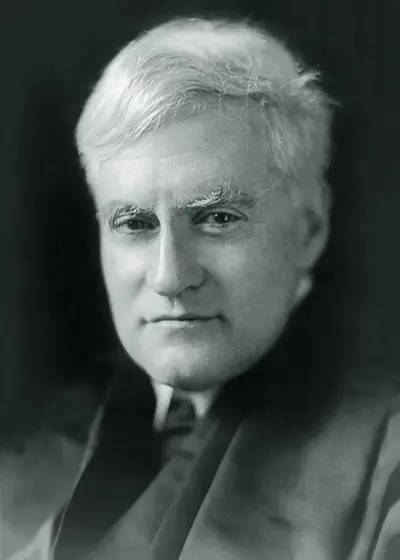
Benjamin Nathan Cardozo was an American jurist who served on the New York Court of Appeals and later as an Associate Justice of the Supreme Court. Cardozo is remembered for his significant influence on the development of American common law in the 20th century, in addition to his philosophy and vivid prose style. Cardozo served on the Supreme Court six years, from 1932 until his death in 1938. Many of his landmark decisions were delivered during his eighteen-year tenure on the New York Court of Appeals, the highest court of that state.
