Norman Davies Quotes
Nowadays, it is no longer possible to maintain that the Nazi-Soviet pact of 23 August 1939 was a fiction invented by bourgeois-imperialist enemies. Everyone has seen the film clips of Herr Ribbentrop landing in Moscow, and of Stalin smiling broadly as Ribbentrop and Molotov signed up side by side.
Davies, Norman. Europe: A History. Oxford University Press, 1996.

Stalin decided not to help the Republicans in Spain—even his fellow communists.


Leval was an appeaser and a collaborator with the Nazi’s. He led the government in name but the Germans really controlled the country. His actions killed tens of thousands of French men and women by turning them over to the Germans. After the Germans were defeated in WWII, Leval was shot as a traitor by the Free French forces.


Many people mistakenly believe that this was the first political use of the “iron curtain” phrase—in German, “eiserner vorhang.” However, George Washington Crile used the phrase in 1915 {598870}. It is not known whether Geobbels knew of Crile’s work, or if Winston Churchill in his famous speech {411311} was familiar with either Crille’s or Goebbels use.

See the American ambassador’s assessment after the war began {41089}

FDR was right about Russia being a major factor in stopping Hitler, but partially wrong about the danger of Russia. The Soviets never did dominate Europe although the tried, but they did dominate Eastern Europe.


This was an incredible order not allowing any Russian Army unit to retreat or surrender. However, it worked. The Russians, with American help of arms, held off the mighty German invading Army. However the German invasion cost the Russians a staggering 22 million lives, mostly civillian.

The Russians had lost over 20 million of its people to German WWII hostilities. They wanted a vengeance and were willing to take the casualties that came with the invasion of Berlin and many other key cities that were heavily defended. Eisenhower and Churchill realized that this would give the Russians a very dominant military occupation of Eastern Europe and Eastern Germany. However, they did not want to take the huge casualties of all these battles. Politically, Churchill and American leaders had to explain to their right wings why Russia was involved as an equal partner in making occupation decisions about Germany.

Trieste was occupied by the British and Americans theoretically, but Tito’s Yugoslavian troops had done most of the WWII fighting and dying in the area and wanted control for the Russian Allies of which Tito was then one. There were frequent armed standoff’s of Anglo Americans and Yugoslav troops that could easily have evolved to full scale fighting. Nine months later, Tito broke with Stalin. An interesting historical fact is that Richard M. Nixon was one of the Congressional Delegation then visiting Trieste.

She was a brilliant woman who was well ahead of her time in many respects. But her rigid adherence to socialism and communism distorted her view of a number of things. This was one. Pogroms were occasions where the Czarist Russian Cossacks or other gangs of hooligans were “allowed” and often encouraged to attack Jewish farms, villages and stores. They looted the property, raped and murdered many of the people, and often ethnically cleansed areas. Rosa was thrilled by the Russian Revolution and assumed that something as uncivilized as Pogroms and anti-Semitism would never take place in the coming communist society of Russia. As a German Jew, although there was a terrible history from the Dark and Middle Ages of German Pogroms and ant-Semitism, Germany of 1917 was too civilized and modern to ever have attacks on Jews. She completely underestimated what the politicians of Russia and Germany would do to control their societies and pander to some while scapegoating and murdering Jews and other minorities. She herself was murdered by a German fascist anti-Semite 2 years after this statement.

Seeger had joined the Young Communist League as a young boy, and was a supporter of Joseph Stalin until all the information about Stalin was made public by Russian Premier Nikita Khrushchev. Seeger, along with other Stalin apologists throughout the world realized that the criticisms of Russian Communism under Stalin were not just right wing propaganda.

So many Afghans thought very differently and resisted Amin’s Government and the Russians, that the Russians pulled out of Afghanistan.

This is an example of what made the Cold War so difficult. The Italian Communists had great misgivings about the Russian version of Communism that tended to abuse human rights and try and control other countries. However, when the Russian Communists were under world attacks by the West, as with their incursion into Hungary, he urged that all the Communists stick together and defend the Russians even for policies that they thought wrong. On the West side, the same thing occurred. The United States tolerated and supported a number of terribly oppressive dictatorships that were virulently anti-Communist. Polarization was the international norm.

Even when Russia was coming to grips with Stalin’s crimes against humanity, Hoxna was still an apologist for the Soviet Dictator, whose “mistakes” cost millions of lives.

The only soldier ever so honored. Marshall was then Chief of Staff of the Army. This quotation is historically very important in that it refutes the accusation made by some FDR and New Deal enemies that Roosevelt was very naïve about the importance of capturing Berlin and ceded control over the invasion and capture of Berlin to Stalin and the Soviet Union. Marshall, one of the most upright of politicians in American history, was not a FDR apologist and few doubted his word or judgment. (Senator Joseph McCarthy and other right wingers however falsely accused him of harboring communists in the Army and working against America’s interest against Russia.

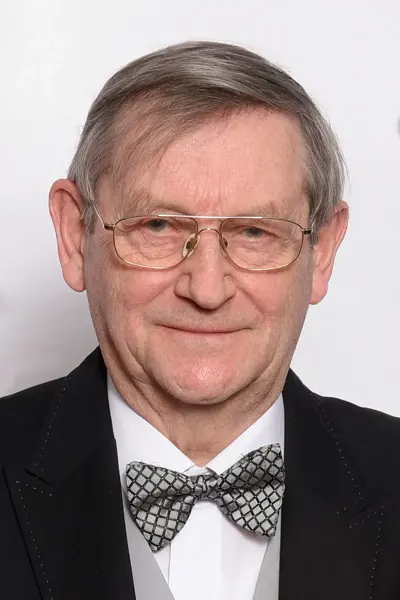
Ivor Norman Richard Davies CMG FBA FRHistS is a Welsh-Polish historian known for his publications on the history of Europe, Poland and the United Kingdom. He has a special interest in Central and Eastern Europe and is UNESCO Professor at the Jagiellonian University, professor emeritus at University College London, a visiting professor at the Collège d'Europe, and an honorary fellow at St Antony's College, Oxford. He was granted Polish citizenship in 2014.
