Marcus Tullius Cicero Quotes
Nothing in oratory is more important than to win for the orator the favour of his hearer, and to have the latter so affected as to be swayed by something resembling an impulse of the spirit impetu quodam animi or emotion perturbatione, rather than by judgment or deliberation. For men decide far more problems by hate, or love, or lust, or rage, or sorrow, or joy, or hope, or fear, or illusion, or some other inward emotion aliqua permotione mentis, than by reality or authority, or any legal standard, or judicial precedent or statute.
Cicero, Marcus Tullius. On the Orator: Book 1-2. Translated by E. W. Sutton and H. Rackham, Harvard University Press, 1942, p. 325.


He was one of the great orators of Ancient Rome. See {240929} for another of his quotes about speechmaking. Both recommend focus and brevity.


Goldman was one of the great orators of all time. The assassin of the mayor of Chicago testified that although he had never talked with her personally he had attended one of her lectures and “she set my on fire.” She was one of the most sought after speakers in the country. This frightened the authorities.


Bryan was the Democratic candidate for the Presidency 3 times and lost each one. He was a populist who could connect with common non-educated people. He was a religious fundamentalist who wanted the state to prohibit the teaching of evolution in schools. He was however, one of the great political orators of American History,

Reagan, Ford, Bush, Clinton

“This” referred to the money to finance the Truman Doctrine of containment of aggressive Communism. There was already a Red Scare in the nation and Vandenberg realized that the only way his Republican Colleagues and the Conservative Democrats would appropriate the money was if there was public demand, and exaggerating the communist menace would scare the country sufficiently to move Congress. Truman took Vandenberg’s advice. On March 12, 1947, Truman delivered a speech to a joint session of Congress and did “scare hell” out of the country. The money for the Truman Doctrine came fourth.

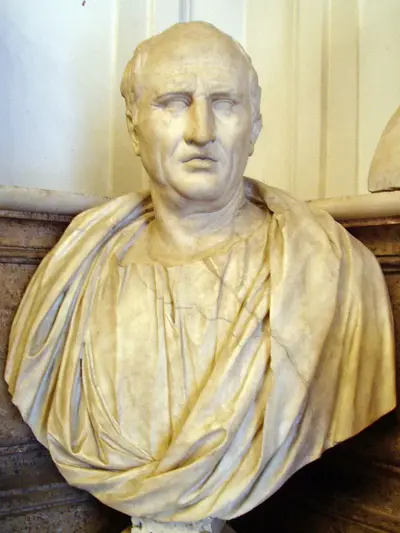
Marcus Tullius Cicero was a Roman statesman, orator, lawyer and philosopher, who served as consul in the year 63 BC. He came from a wealthy municipal family of the Roman equestrian order, and is considered one of Rome's greatest orators and prose stylists.
