David Hume Quotes
Eloquence, when at its highest pitch, leaves little room for reason or reflection; but addressing itself entirely to the fancy or the affections, captivates the willing hearers, and subdues their understanding. Happily, this pitch it seldom attains. But what a Tully or a Demosthenes could scarcely effect over a Roman or Athenian audience, every Capuchin, every itinerant or stationary teacher can perform over the generality of mankind, and in a higher degree, by touching such gross and vulgar passions.
Hume, David. An Enquiry Concerning Human Understanding. Edited by L. A. Selby-Bigge, Clarendon Press, 1902, p. 118.


He was one of the great orators of Ancient Rome. See {240929} for another of his quotes about speechmaking. Both recommend focus and brevity.


Goldman was one of the great orators of all time. The assassin of the mayor of Chicago testified that although he had never talked with her personally he had attended one of her lectures and “she set my on fire.” She was one of the most sought after speakers in the country. This frightened the authorities.

He was not referring to electronic amplification of the sound – microphones, speakers, and amplifiers were not yet invented. He was referring to the style and content of the speech.


Bryan was the Democratic candidate for the Presidency 3 times and lost each one. He was a populist who could connect with common non-educated people. He was a religious fundamentalist who wanted the state to prohibit the teaching of evolution in schools. He was however, one of the great political orators of American History,


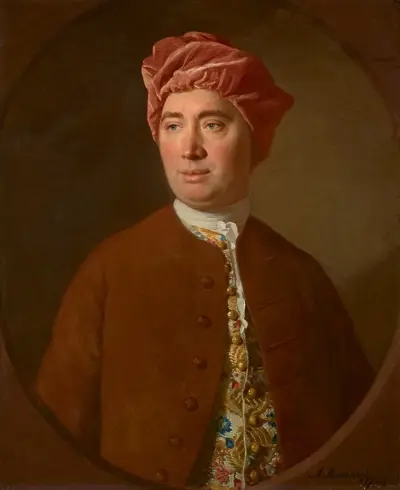
David Hume, Hume strove to create a naturalistic science of man that examined the psychological basis of human nature. Hume argued against the existence of innate ideas, positing that all human knowledge derives solely from experience. This places him with Francis Bacon, Thomas Hobbes, John Locke, and George Berkeley as a British Empiricist.
