Alexey Arbatov Quotes
Not since June 1941 has the Russian military stood as perilously close to ruin as it does now.
June 1941 was the date that Nazi Germany invaded Russia.
Alexey Arbatov, Deputy of the Russian Duma, “Military Reform in Russia”, International Security, Spring 1998
Sourced by: Eigen's Political and Historical Quotations


The Russians had lost over 20 million of its people to German WWII hostilities. They wanted a vengeance and were willing to take the casualties that came with the invasion of Berlin and many other key cities that were heavily defended. Eisenhower and Churchill realized that this would give the Russians a very dominant military occupation of Eastern Europe and Eastern Germany. However, they did not want to take the huge casualties of all these battles. Politically, Churchill and American leaders had to explain to their right wings why Russia was involved as an equal partner in making occupation decisions about Germany.


He was right. Before WWII Russia was not considered a very important country in the world, but having emerged from WWII, Russia was stronger than ever and counties like Germany and Italy were in ruins.

The British suspected that the Turks of Anatolia were complicit with Bolshevism

The Germans had invaded Russia who despite losing over 20 million people continued to fight the Germans who had never had to deploy forces over such a large territory. But it was the severe Russian Winter that turned the tide. Germans were not equipped or dressed for the terrible winter. The Russians were used to it. The Germans were repulsed and had to retreat back into Germany.

Many people mistakenly believe that this was the first political use of the “iron curtain” phrase—in German, “eiserner vorhang.” However, George Washington Crile used the phrase in 1915 {598870}. It is not known whether Geobbels knew of Crile’s work, or if Winston Churchill in his famous speech {411311} was familiar with either Crille’s or Goebbels use.

The Emperor was writing to his son to explain the defeat of Japan. In what was a bit of revisionist history, the Emperor neglected to mention that with the exception of some of the incursions in China, Hirohito had personally approved every Japanese invasion including Pearl Harbor. Further, it was he who had approved the orders that Japanese troops should fight to the death rather than retreat or surrender.

In this case, the Speaker of the House attacked the President of his own party for being willing to conduct disarmament discussions with the Russians. He implied that the outcome could be the appeasement of the Russians just as British Prime Minister Neville Chamberlain appeased Hitler in 1938 in Munich, giving the German Fuhrer the “green light” to take over Europe. The Conservative Caucus went even further and explicitly called it “appeasement”. Reagan however always talked about military strength and power, and provided plenty of money for the military and weapons a few of which were boondoggles but he was a very cautious American president in authorizing military force. And he not only was willing to discuss arms control and reductions and enter into treaties for disarmament, much to the distress of the hawks of his own party. Few American Presidents have so well balanced the use of diplomacy with the threat of military force as well as Reagan.

Dr. Snyder was the youngest physicist at Los Alamos working on the Atom Bomb Manhattan Project. His rocketry skill was used to fire probes into the highly radioactive area to obtain samples and measurements immediately after the test bomb was exploded.

Generally, the American military is much more optimistic of its ability to accomplish its objectives as that it the way they have been trained. The General warns that the same attitude will make them more optimistic and willing to tackle a very difficult if not impossible problem than most would be. So civilians in America have to question what they are doing. At the same time, there have been a number of highly sophisticated military officers who have both a military and civilian perspective and education. They tend to be more realistic and at times argue against military deployments and missions that are being considered. However, once deployed and committed, it is culturally difficult or impossible for a member of the military to be pessimistic about the eventual


He was objecting to the current crop of senior military officer who have little experience in fighting and much in academic, strategic and technical training. Many however see him as a dinosaur who does not realized the complex nature of the modern military missions. In general, we have won almost all of our fighting battles but often failed in our maintaining civil society, occupation, nation building, military procurement, preventing sexual assault of our own troops by our own soldiers, assuring mental health of our soldiers. Hackworth, detractors argue, wants to change what already works and ignore what does not.
The alternative deterrent was to maintain an army of over 2 million men overseas in both Europe and Asia, and the cost was much greater than the then perceived cost of nuclear weapons. At the time no one figured the cost of coping with the radioactive material and waste as well as the cleanup of nuclear bomb factories like Hanford. These costs were still not known byt the 21st century.

Ivan Khrfistoforovich Bagramyan. Most militaries including ours have generally been trained and equipped for the last war and not the next war.
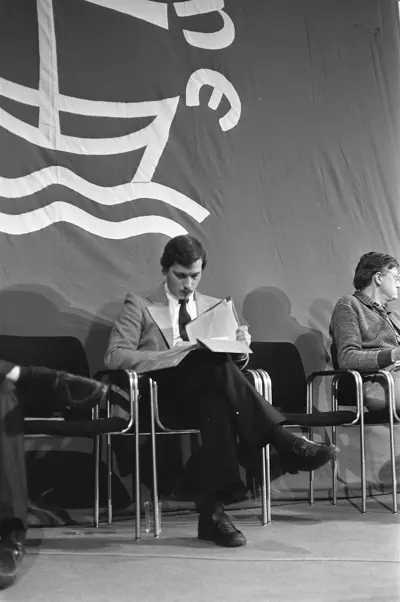
Dr. Alexei Georgievich Arbatov, PhD is a full member of the Russian Academy of Sciences, the Head of the Center for International Security at the Institute of World Economy and International Relations (IMEMO), and a scholar in residence at the Carnegie Moscow Center. He is a Russian political scientist, academic, author, and former politician.
