Reinhold Niebuhr Quotes
Not only in America but in Germany, in France since the war, in Germany after the First World War, the Germany of Adenauer, these are the creative relationships of Catholicism to a free society that the average American doesn't fully appreciate.
Niebuhr, Reinhold. Interview by Mike Wallace. The Mike Wallace Interview, American Broadcasting Company, 27 Apr. 1958.

The University Presidents had written to the American Public arguing that the German aggression was the result of the militarists in the German society dominating the people and pushing them to war. They argued that most German people were not really responsible. Lamprecht took exception and argued that the German policy was the democratic will of the majority of the German people. He claimed that Germany at the time was more of a de facto democracy than America—as the Untied States did not have a Voting Rights Act or any way of de facto ensuring that all citizens could vote—particularly Negroes in the South. While he was accurate about the voting aspects of a democracy, Germany neither had the Constitution nor a judiciary that was independent and co-equal to the executive and legislature, but Germany did not have the institutions with democratic traditions. The greatest embarrassment to modern Germans is that Adolf Hitler was actually elected by a majority of Germans and was very popular until things in Germany started to go poorly. This quotation is very important in that it shows the importance of a Constitution to limit the powers of even a popularly elected government.


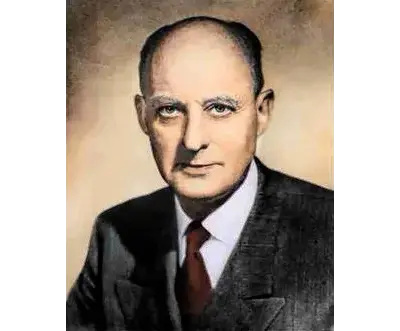
Karl Paul Reinhold Niebuhr (1892–1971) was an American Reformed theologian, ethicist, commentator on politics and public affairs, and professor at Union Theological Seminary for more than 30 years. Niebuhr was one of America's leading public intellectuals for several decades of the 20th century and received the Presidential Medal of Freedom in 1964. A public theologian, he wrote and spoke frequently about the intersection of religion, politics, and public policy, with his most influential books including Moral Man and Immoral Society and The Nature and Destiny of Man. The latter is ranked number 18 of the top 100 non-fiction books of the twentieth century by Modern Library. Andrew Bacevich labelled Niebuhr's book The Irony of American History "the most important book ever written on U.S. foreign policy." The historian Arthur Schlesinger Jr. described Niebuhr as "the most influential American theologian of the 20th century" and Time posthumously called Niebuhr "the greatest Protestant theologian in America since Jonathan Edwards."
