Reinhold Niebuhr Quotes
Religion mustn't interfere with the state - so one of the basic Democratic principles as we know it in America is the separation of church and state.
Niebuhr, Reinhold. Interview by Mike Wallace. The Mike Wallace Interview, American Broadcasting Company, 27 Apr. 1958.


At the time Kaunitz was a young lawyer and diplomat who had abandoned the church career that his parents had hoped for him.


Carter was personally one of the most religious of our Presidents.

The same phrase was used by Count de Montalembert at a Catholic conference in Malines, August 20, 1863, and is sometimes attributed to him.

At the time. Catholics in America were proportionately many fewer than today, and anti-Catholic sentiment and discrimination was very common. If the government then could become involved with religion, the protestant-dominated government would likely have restricted the Church and Catholics. So Catholics were, like Bishop England an absolutist for the separation of church and state. However towards the end of the 20th century, Roman Catholics were about 25% of the population and anti-Catholic sentiment was reduced to relatively few Protest extremists, who were rejected by the main stream even of Protestants. Then the Catholic bishops began to change their position and advocated Federal aid to parochial schools and various Catholic social services. They also began to lobby government to make laws enforcing the Catholic views of morality.


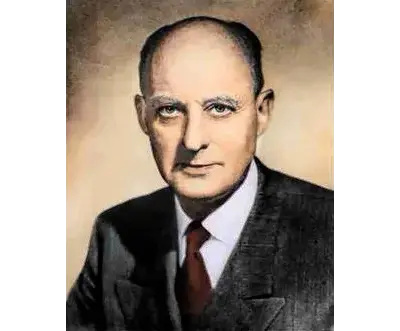
Karl Paul Reinhold Niebuhr (1892–1971) was an American Reformed theologian, ethicist, commentator on politics and public affairs, and professor at Union Theological Seminary for more than 30 years. Niebuhr was one of America's leading public intellectuals for several decades of the 20th century and received the Presidential Medal of Freedom in 1964. A public theologian, he wrote and spoke frequently about the intersection of religion, politics, and public policy, with his most influential books including Moral Man and Immoral Society and The Nature and Destiny of Man. The latter is ranked number 18 of the top 100 non-fiction books of the twentieth century by Modern Library. Andrew Bacevich labelled Niebuhr's book The Irony of American History "the most important book ever written on U.S. foreign policy." The historian Arthur Schlesinger Jr. described Niebuhr as "the most influential American theologian of the 20th century" and Time posthumously called Niebuhr "the greatest Protestant theologian in America since Jonathan Edwards."
