Wenzel Anton Kaunitz Quotes
You may be sure that if ever I attain power, neither church nor churchman shall have a voice in Austria. I fear not Religion.
At the time Kaunitz was a young lawyer and diplomat who had abandoned the church career that his parents had hoped for him.
Wenzel Anton Kaunitz, 1711-1794, Austrian Prime Minister, Chancellor of State and Minister of foreign affairs, Statement to Cabinet Minister Binder
Sourced by: Eigen's Political and Historical Quotations


The same phrase was used by Count de Montalembert at a Catholic conference in Malines, August 20, 1863, and is sometimes attributed to him.


Ironically, without the word “wicked” most people would regard the first sentence as a good description of elements of a modern democracy. It illustrates that for the Islamic fundamentalist democracy substitutes the rule of man for the rule of God, freedom of speech allows heresy and blasphemy to to uttered and communicated, and religion which is supposed to inform and direct politics. So what is good for the lover of democracy is the very thing that is bad for Islam. This is not a uniquely Islamic viewpoint. It has been and is held by fundamentalist Christians and Jews as well who would return to Biblical law punishing blasphemy and heresy with death and have religion drive all politics.


This quotation is one of the first to make the critical observation that the only time that tolerance of a religion is necessary is when there is an established church and others that deviate from it. If there is no established church, as the Founding Fathers envisioned, there is no preeminent church to do the tolerating. All are equal. In practice, Protestant churches were proportionately dominant in early America and up through the 20th century. So most of the issue of tolerance problems in America were cultural. And there is still a minority of Christians who believe that America should be a Christian country and other religions should be “tolerated.” However, Clinton and most of the founders did not want to see even general Christianity established as the national religion even they it was the majority religion.

This appears to be one of the first religious groups to withdraw and separate from a state church.


Catholics were blamed by some for the defeat of Henry Clay in 1844. Anti catholic sentiment was high:. Johnson was then a Congressman representing a district where there were few Catholics and strong anti-Catholic feeling.


The Senate was presented with James Madison’s Language for the First Amendment. These three alternatives were proposed and rejected. The rejected versions turn out to have been very important. Some have argued that the First Amendment does not prohibit Congress making laws regarding religion as long as it doesn’t favor one religion over another—for example pay for clerics of all religions. However, that was the third proposal and it was rejected in favor of the high wall of separation proposed by Madison.

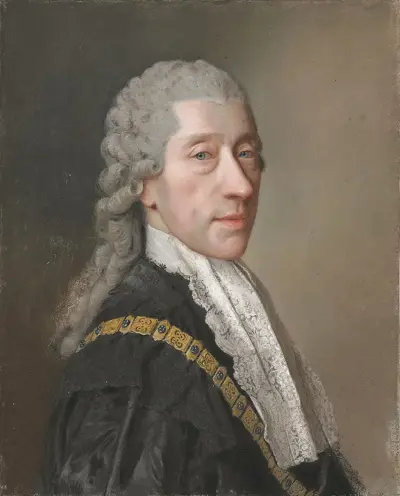
Wenzel Anton, Prince of Kaunitz-Rietberg was an Austrian and Czech diplomat and statesman in the Habsburg Monarchy. A proponent of enlightened absolutism, he held the office of State Chancellor for about four decades and was responsible for the foreign policies during the reigns of Maria Theresa, Joseph II, and Leopold II. In 1764, he was elevated to the noble rank of a Prince of the Holy Roman Empire (Reichfürst).
