Mark Twain Quotes
Not a single right is indestructible: a new might can at any time abolish it, hence, man possesses not a single permanent right. God is Might (and He is shifty, malicious, and uncertain).
Twain, Mark. Mark Twain's Notebook. Harper & Brothers, 1935.


Unlike most of his televangelist successors, Sheen was very ecumenical. He was clearly Catholic but had a very significant Protestant and Jewish Audience as well as Catholic.


Note the use of the phrase “against the government.” One of the unique aspects of the American Constitution and The Bill of Rights is that the government is considered a potential and even probable infringer on the liberties of the people. It is almost as though the government was the potential enemy. Modern libertarians state this very explicitly and it is ever present in the views of both the right and left wings of American politics. Most centrists recoil at the thought that some citizens see the government as the enemy, but even in America there have been times where the government has infringed on the rights of citizens only to have the courts or future administrations and Congresses correct the error.
Jefferson and some of the other Founding Fathers saw the American experiment as having implications for the whole world. To Jefferson, the Declaration of Independence was not just for Americans but ideally for all mankind.
In the Declaration of Independence and our Constitution there were time limits and constraints on getting consensus of which rights would be enumerated. The fact that all rights were not in these documents does not mean that they were not considered rights by many of the founders. One of the major political debates in American history has been whether other rights should be functional and legislated other than those that were mentioned in these founding documents. Many of these have found their way into State constitutions and legislation. But rights that were not specifically enumerated in the Constitution for example include the right of privacy, a right to education, a right to health care and many others.

Hayward claimed that Wilson was the first American President who ever criticized the American Constitution. Many do not agree as Madison and Jefferson in part, along with most other Americans, found the Constitution so wanting that it was ratified only on condition of the passage of the Bill of Rights. Jackson, was distressed by the limitations on the President and many others had their objections, but Wilson, before he became a politician was a prominent academic political scientist and wrote voluminously and had an intellectual following so his criticism was not considered so “political” as others.


Hamilton acknowledged that the major public objection to the new U. S. Constitution was its lack of a Bill of Rights, which Hamilton argued was unnecessary.
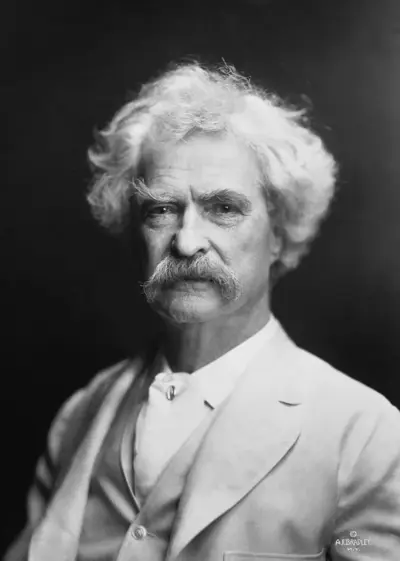
Samuel Langhorne Clemens, known by his pen name Mark Twain, was an American writer, humorist, entrepreneur, publisher, and lecturer. He was lauded as the "greatest humorist the United States has produced," and William Faulkner called him "the father of American literature". His novels include The Adventures of Tom Sawyer (1876) and its sequel, the Adventures of Huckleberry Finn (1884), the latter often called "The Great American Novel".
