Susan B. Anthony Quotes
The Declaration of Independence, the United States Constitution, the constitutions of the several states, and the organic laws of the territories all alike propose to protect the people in the exercise of their God-given rights. Not one of them pretends to bestow rights.
Anthony, Susan B. "Is it a Crime for a Citizen of the United States to Vote?" 1873. An Account of the Proceedings on the Trial of Susan B. Anthony, Daily Democrat and Chronicle Book Print, 1874, p. 152.


Jefferson and some of the other Founding Fathers saw the American experiment as having implications for the whole world. To Jefferson, the Declaration of Independence was not just for Americans but ideally for all mankind.


Hayward claimed that Wilson was the first American President who ever criticized the American Constitution. Many do not agree as Madison and Jefferson in part, along with most other Americans, found the Constitution so wanting that it was ratified only on condition of the passage of the Bill of Rights. Jackson, was distressed by the limitations on the President and many others had their objections, but Wilson, before he became a politician was a prominent academic political scientist and wrote voluminously and had an intellectual following so his criticism was not considered so “political” as others.


Jefferson had deliberately modified John Locke’s phrase “life, liberty and property.

The preamble to this declaration of womens’ rights cleverly beginy s with the words of the Declaration of Independence with the single change that “all men” is replaced with “all men and women.” The message was clear. If the founders had a moral right and duty to revolt for these objectives women would be justified and duty bound to make similar efforts. That message terrified many men of the era.


Jefferson’s original was: We hold these truths to be sacred and undeniable that all …
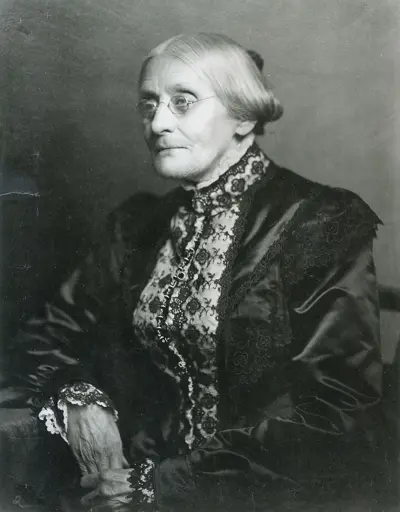
Susan B. Anthony was an American social reformer and women's rights activist who played a pivotal role in the women's suffrage movement. Born into a Quaker family committed to social equality, she collected anti-slavery petitions at the age of 17. In 1856, she became the New York state agent for the American Anti-Slavery Society.
