John Dickinson Quotes
The rights essential to happiness. . . . We claim them from a higher source - from the King of kings and Lord of all the earth.
Dickinson, John. An Address to the Committee of Correspondence in Barbados. William Bradford, 1766, p. 4.


The President did not apparently think that this would be a religious test of office which would be prohibited by the Constitution.

Unlike most of his televangelist successors, Sheen was very ecumenical. He was clearly Catholic but had a very significant Protestant and Jewish Audience as well as Catholic.


This famous Jefferson quotation is often used by those who argue that Jefferson’s concept of freedom and liberty was inherently and necessarily connected to the concept of God despite his strong and passionate writings advocating the separation of church and state. Opponents of that point of view, argue that the Rights of British America was a political document written to enlist and increase public support for Jefferson’s notions of freedom and liberty. At the time, as today, most Americans were deists, and they argue that just because Jefferson appealed to the popular perception of the day to promote his ideas, does not mean that a supreme being was fundamental to Jefferson’s philosophy. It is probably the case however, that Jefferson, like other founders such as John Adams, and many modern people, had different views on this subject at different times in their lives and never were absolutely sure of the existence of or necessity of a supreme being.

After being castigated by the Pope, Lameddais broke with the Church and concentrated on publishing and politics.

This is a very important political, historical, and philosophical quotation. This is a view that is very common amongst many Americans—especially those who are religious. As a factual matter, it is not clear that ALL the founding fathers personally believed in the creator--God. All the views have never been discerned. However it is almost certain that the majority of the Founders so believed. The complication with taking this viewpoint too literally is that while our rights may have come from God, it is men who determined exactly what rights would be enumerated on our constitution. For example. the original draft of the Constitution did not include, the right to a free press, the right of due process, the right of being free from religious compulsion and others. Yet it passed. Then other men and women wanted more rights added and the Constitution was ratified on condition that the Bill or Rights would be incorporated as the first 10 amendments. There were other rights that were not explicitly mentioned. For example, there is no right to an education mentioned in the Constitution or any of the amendments. Blacks had no rights until additional amendments were passed. And later there was an amendment that denied Americans the right to drink alcohol. Then another that gave the rights back. There are rights that other nations have which we do not—ie the right to medical care. Which if these did God grant and which, not? So even if we assume that every one of the founding fathers not only believed in God, but believed the rights were all God given, we would still be in the practical dilemma of having to specify the language of each right and always to, by amendment, adding additional rights or modifying or even deleting older rights. Many believe that Americans were divinely inspired when we added (or changed) rights. Others, not. However, regardless, we must go through the same procedures of enumerating American rights and amending the constitution. So the process is the same for both those who believe that our rights come from God and those who do not. To change rights, we need the action of Americans divinely inspired or otherwise, but they can and have been changed. For example, before 1963 Americans did not have a right to use birth control devices. After the Supreme Court Griswald v. Conn. We did and now have a right to use birth control devices. The mode that rights are manifested, defined, enumerated and implemented is a political one—one that in our American system allows us all to implement that system whether or not we believe that our rights come from our Creator.


This quotation many think is the greatest statement of political equality ever written. Interestingly is also lays an obligation on all people for all others. It was written by a privileged nobleman, a Baron, who was instrumental philosophically and politically in establishing the Batavia Republic in Holland.


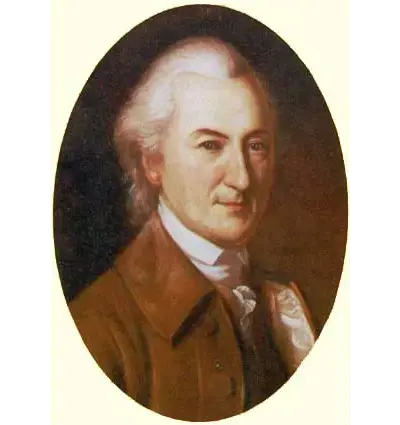
John Dickinson, a Founding Father of the United States, was a solicitor and politician from Philadelphia, Pennsylvania, and Wilmington, Delaware, known as the "Penman of the Revolution" for his twelve Letters from a Farmer in Pennsylvania, published individually in 1767 and 1768. As a member of the First Continental Congress, where he was a signee to the Continental Association, Dickinson drafted most of the 1774 Petition to the King, and then, as a member of the Second Continental Congress, wrote the 1775 Olive Branch Petition. When these two attempts to negotiate with King George III of Great Britain failed, Dickinson reworked Thomas Jefferson's language and wrote the final draft of the 1775 Declaration of the Causes and Necessity of Taking Up Arms. When Congress then decided to seek independence from Great Britain, Dickinson served on the committee that wrote the Model Treaty, and then wrote the first draft of the 1776–1777 Articles of Confederation and Perpetual Union.
