Helen Keller Quotes
When one comes to think of it, there are no such things as divine, immutable, or inalienable rights. Rights are things we get when we are strong enough to make good our claim on them.
Keller, Helen. Out of the Dark: Essays, Letters, and Addresses on Physical and Social Vision. Doubleday, Page & Company, 1913, p. 116.


This is a very important political, historical, and philosophical quotation. This is a view that is very common amongst many Americans—especially those who are religious. As a factual matter, it is not clear that ALL the founding fathers personally believed in the creator--God. All the views have never been discerned. However it is almost certain that the majority of the Founders so believed. The complication with taking this viewpoint too literally is that while our rights may have come from God, it is men who determined exactly what rights would be enumerated on our constitution. For example. the original draft of the Constitution did not include, the right to a free press, the right of due process, the right of being free from religious compulsion and others. Yet it passed. Then other men and women wanted more rights added and the Constitution was ratified on condition that the Bill or Rights would be incorporated as the first 10 amendments. There were other rights that were not explicitly mentioned. For example, there is no right to an education mentioned in the Constitution or any of the amendments. Blacks had no rights until additional amendments were passed. And later there was an amendment that denied Americans the right to drink alcohol. Then another that gave the rights back. There are rights that other nations have which we do not—ie the right to medical care. Which if these did God grant and which, not? So even if we assume that every one of the founding fathers not only believed in God, but believed the rights were all God given, we would still be in the practical dilemma of having to specify the language of each right and always to, by amendment, adding additional rights or modifying or even deleting older rights. Many believe that Americans were divinely inspired when we added (or changed) rights. Others, not. However, regardless, we must go through the same procedures of enumerating American rights and amending the constitution. So the process is the same for both those who believe that our rights come from God and those who do not. To change rights, we need the action of Americans divinely inspired or otherwise, but they can and have been changed. For example, before 1963 Americans did not have a right to use birth control devices. After the Supreme Court Griswald v. Conn. We did and now have a right to use birth control devices. The mode that rights are manifested, defined, enumerated and implemented is a political one—one that in our American system allows us all to implement that system whether or not we believe that our rights come from our Creator.


In the Declaration of Independence and our Constitution there were time limits and constraints on getting consensus of which rights would be enumerated. The fact that all rights were not in these documents does not mean that they were not considered rights by many of the founders. One of the major political debates in American history has been whether other rights should be functional and legislated other than those that were mentioned in these founding documents. Many of these have found their way into State constitutions and legislation. But rights that were not specifically enumerated in the Constitution for example include the right of privacy, a right to education, a right to health care and many others.


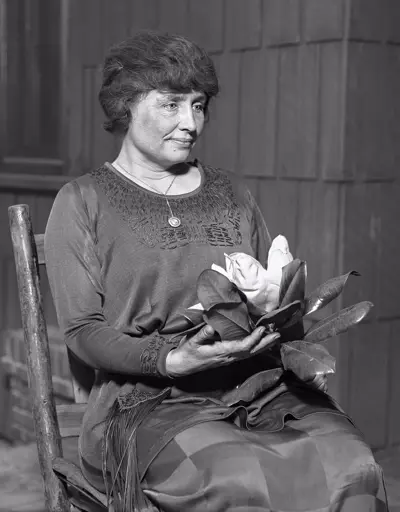
Helen Adams Keller was an American author, disability rights advocate, political activist and lecturer. Born in West Tuscumbia, Alabama, she lost her sight and hearing after a bout of illness at the age of nineteen months. She then communicated primarily using home signs until the age of seven when she met her first teacher and life-long companion Anne Sullivan, who taught her language, including reading and writing; Sullivan's first lessons involved spelling words on Keller's hand to show her the names of objects around her. She also learned how to speak and to understand other people's speech using the Tadoma method. After an education at both specialist and mainstream schools, she attended Radcliffe College of Harvard University and became the first deafblind person to earn a Bachelor of Arts degree. She worked for the American Foundation for the Blind (AFB) from 1924 until 1968, during which time she toured the United States and traveled to 39 countries around the globe advocating for those with vision loss.
