John Kenneth Galbraith Quotes
No one was responsible for the great Wall Street crash. No one engineered the speculation that preceded it. Both were the product of free choice and decision of hundreds of thousands of individuals.
Galbraith, John Kenneth. The Great Crash 1929. Houghton Mifflin, 1955.


Franklin D. Roosevelt and the New Deal then created the Securities and Exchange Commission to Regulate the Stock Market and that kept things under reasonable control for over 50 years, but then the fraudulent schemes had gotten very sophisticated and the Enron and other scandals were uncovered, leading to Sarbanes Oxley and other more regulatory legislation.

There was a financial crisis in the country and the world when highly risky home mortgage loans defaulted leaving investors and speculators in mortgage-backed securities in a poor position. The investors had been reaping very high interest rates for their risky investments, but this was the first time that this form of risky investment had failed. The investors, of course were looking for a bailout from government. When the Bush administration failed to bail out investment bank, Lehman, there was a panic and the banking system of the country and much of the world froze up. Bush and his Secretary reversed their bailout of speculators policy and provided various assistants and bailouts to the very bankers and other investors who had caused the economic meltdown. The policy was continued by the Obama administration although the bailouts were just as distasteful to Obama as they were to Bush, but most economists agree that the two presidents very distasteful and unpopular bailout actions probably saved the nation from a massive depression. After being bailed out by the taxpayers, the Bankers then paid themselves exorbitant bonuses while the results of their management put 10 percent of the country out of work.


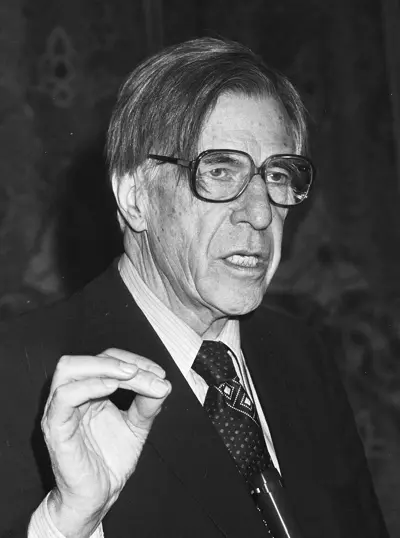
John Kenneth Galbraith OC, also known as Ken Galbraith, was a Canadian-American economist, diplomat, public official and intellectual. A leading proponent of 20th-century American liberalism, his books on economic topics were bestsellers from the 1950s through the 2000s. As an economist, he leaned toward post-Keynesian economics from an institutionalist perspective.
