Finley Peter Dunne Quotes
No matter whether th' Constitution follows th' flag or not, the Supreme Coort follows th' iliction returns.
For the phrase the "The Constitution follows the flag," see the Democratic Party platform of 1900.
Finley Peter Dunne, 1867-1936, American humorist & newspaper editor, Mr. Dooley's Opinions, 1900
Sourced by: Eigen's Political and Historical Quotations


Cummings was arguing against a Constitutional amendment. His alternative led to Roosevelt's court packing schema.


This concept of balance of power and the equal role of the judiciary is actually quite rare. Even in Parliamentary democracies the parliament can override any court interpretation. In England, the upper legislative house, the House of Lords, actually serves as the nation’s highest or supreme court. And these “Law Lords” can override all regular judicial bodies.

It is argued whether Scalia’s problem was that the Supreme Court was doing something new or radical or the country had changed. He had certainly lived through the greatest transformation of any society and culture on earth at a pace of change that far exceeds anything that has occurred before. Scalia is one who believes that the Constitution should not be interpreted in recognition of these changes, but should be immutable as it was written for the late 18th century. Most judges and legal scholars disagree and try to interpret the Constitution as the founders would have intended, knowing what we know, having the tools and powers we have, and facing the problems of the modern world. It represents a major legal and philosophical debate.

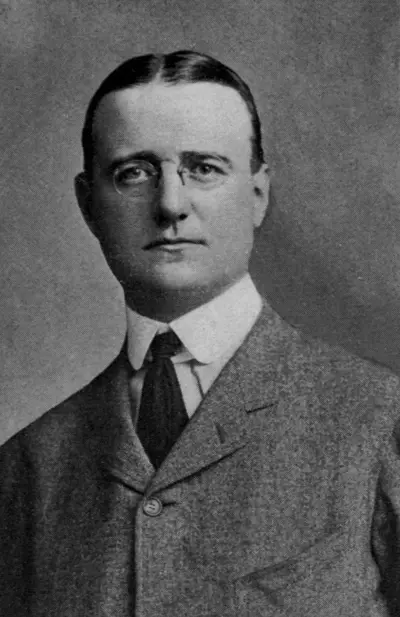
Finley Peter Dunne was an American humorist and writer from Chicago. In 1898 Dunne published Mr. Dooley in Peace and in War, a collection of his nationally syndicated Mr. Dooley sketches. Speaking with the thick verbiage and accent of an Irish immigrant from County Roscommon, the fictional Mr. Dooley expounded upon political and social issues of the day from his South Side Chicago Irish pub. Dunne's sly humor and political acumen won the support of President Theodore Roosevelt, a frequent target of Mr. Dooley's barbs. Dunne's sketches became so popular and such a litmus test of public opinion that they were read each week at White House cabinet meetings.
