Anatole France Quotes
No government ought to be without censors; and where the press is free, no one ever will. Chance is the pseudonym of God when he did not want to sign.


Arguing against explicit guarantees of press freedom in the Constitution Hamilton felt that the freedom could be maintained by public opinion and the good will of government:

In September of 2005 a Rose’s newspaper published some political cartoons showing the hypocrisy of some Muslims who use Islam to justify murder of innocents and terrorism. Months later, in January of 2006 many in the Middle East protested vehemently and Muslim riots broke out because the Prophet Muhammad's visage was depicted against Islamic tradition. Many Muslim nations started a boycott against Denmark. Many Muslim leaders claimed that insulting religion was an “abuse” of freedom of speech including those from nations which regularly publish material that is virulent against Christians and Jews. Apologies were demanded from Rose.

The evils of the time were even worse than in modern times. Most newspapers, journals, and periodicals were in 1835 actually owned and operated by political parties or people totally identified with political parties. In modern times, there are publications and blogs which are controlled by political forces, but most are not.


Samuel Langhorne Clemens, 1835-1910

Chairman of the Board of The Washington Post. The Attorney General had attempted to suppress information linking him to the Watergate conspiracy by threatening Washington Post staff. The story was run, and Mr. Mitchell was later convicted for his crimes in connection with Watergate.


While most American leaders in 1776 advocated separation of church and state, others did not. There probably has been no better statement for religion in government than this one. Essentially, this view has been held by orthodox Christians, Jews, Muslims and has been at the heart of every theocracy such as Iran.


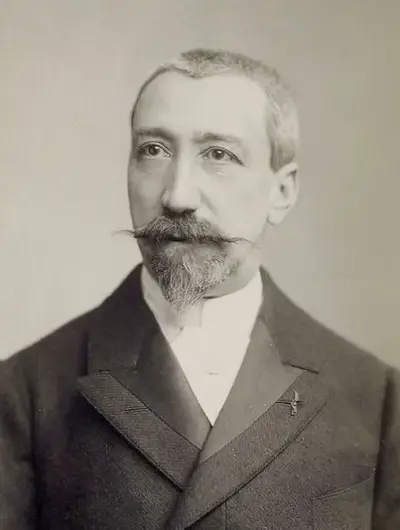
Anatole France was a French poet, journalist, and novelist with several best-sellers. Ironic and skeptical, he was considered in his day the ideal French man of letters. He was a member of the Académie française, and won the 1921 Nobel Prize in Literature "in recognition of his brilliant literary achievements, characterized as they are by a nobility of style, a profound human sympathy, grace, and a true Gallic temperament".
