Ernest Bevin Quotes
My policy is to be able to take a ticket at Victoria Station and go anywhere I damn well please.
Ernest Bevin, 1881-1951, British Foreign Minister (Labour), The Spectator, April 20, 1951
Sourced by: Eigen's Political and Historical Quotations


The Blair Administration issued a "Report" they had "obtained" supporting the American.

Sealed under duress and later repudiated by the King with Papal assistance


A major problem in politics is that many governments and factions have at times acted against their own interest. The polarization of America at the beginning of the 21st century where each party would no sooner win an election than follow their passions and ideologies and then get thrown out of office by the voters. Or a nation going to war against a hated and traditional enemy when they did not have the military power or economic resources to prevail. One of the best examples was the Argentine invasion of the Falkland Islands. Another was the American policy of isolationism prior to WWII. Both Napoleon’s and Hitler’s attempted invasions of Russia were also examples. Political parties even more commonly act for the passions of their base of supporters to their detriment. This is extremely common.


The observation seems to hold for individuals, institutions, and nations.
“Erzatz” is a German word meaning imitation with the connotation that the imitation is far inferior to the original.


Although Great Britain had abolished slavery, British economic interests during the Civil War suffered because of the Northern blockade of the South. Much political opinion in England was hostile to the blockade policies of the Union. Bright, a great admirer and supporter of the United Sates and the Union cause was concerned that the United States might drift into War with Great Britain. His letter to Senator Sumner was written with the understanding that it would be in shared with President Lincoln, and it was actually read at a cabinet meeting.


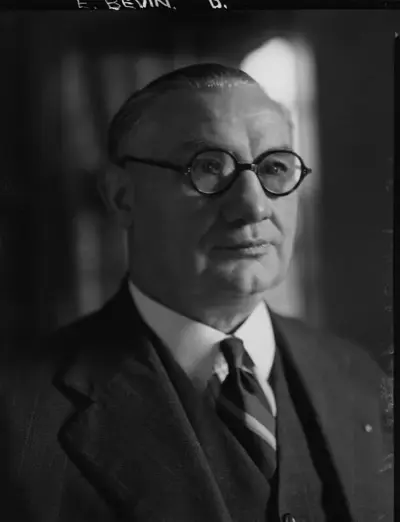
Ernest Bevin was a British statesman, trade union leader, and Labour politician. He co-founded and served as General Secretary of the powerful Transport and General Workers' Union in the years 1922–1940, and served as Minister of Labour and National Service in the war-time coalition government. He succeeded in maximising the British labour supply, for both the armed services and domestic industrial production, with a minimum of strikes and disruption.
