Thomas Malthus Quotes
It should be observed that we have lately seen the most striking instances in all quarters, of governments acting from passion rather than interest.
A major problem in politics is that many governments and factions have at times acted against their own interest. The polarization of America at the beginning of the 21st century where each party would no sooner win an election than follow their passions and ideologies and then get thrown out of office by the voters. Or a nation going to war against a hated and traditional enemy when they did not have the military power or economic resources to prevail. One of the best examples was the Argentine invasion of the Falkland Islands. Another was the American policy of isolationism prior to WWII. Both Napoleon’s and Hitler’s attempted invasions of Russia were also examples. Political parties even more commonly act for the passions of their base of supporters to their detriment. This is extremely common.
Thomas Malthus, 1766-1834, British Cleric and Economist, The Corn Laws, 1814
Sourced by: Eigen's Political and Historical Quotations


This is a common phenomenon in most democracies. There are 3 reasons that people vote against their interests. One is that they are fooled by the slickness of particular candidate and/or promises and assurances. Second, their cultural values are offended by the candidate who advocates and will fight for their interests. Third, they have been frightened sufficiently that they will sacrifice their interests if that will protect them. One frequent example is that in America in all wars, many people have voted for the candidate or party who would erode and/or deny their civil rights in the name of national security.

The Undersecretary had misgivings just before the ill-fated Bay of Pigs invasion, and urged a cancellation:


1st Earl Lloyd-George of Dwyfor

At the beginning of the Battle of Britain, it appeared that England would not be able to hold out against Germany. King was asked by Roosevelt to try and persuade British officials that if they sued for peace that they would not turn over the British fleet to the Germans but would convey it to Canada. Such an act would have produced serious retribution by the Germans.


He and his Prime Minister, John Majors, had become so unpopular, that they were forced to resign by their own Conservative Party and never had to be voted out of office.


The CIA did not have a long tradition. It was created after WWII when the OSS was are espionage organization had been disbanded In the early days of the Cold War, the CIA went rogue and engaged in covert activities without the knowledge and approval of the President and his cabinet. General Maxwell Taylor conducted a thorough investigation and the agency was brought under control. There hav been several more incidents since then and every few years there have been additional scandals of unauthorized operations which were harmful to American interests and values. In a democracy it is always hard to control a secret organization. Actually, at the beginning of WWII, we had almost no espionage capability and President Roosevelt had a series of friends who provided him with intelligence until William Donavan had time to establish the OSS which did such a wonderful job.

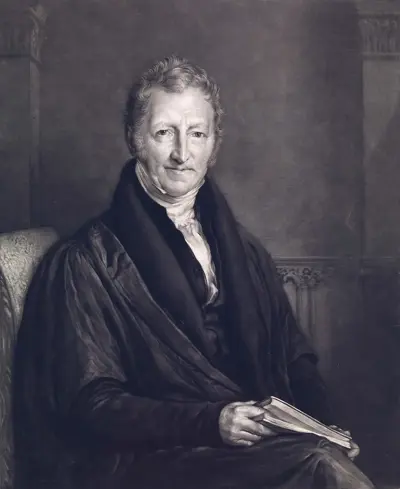
Thomas Robert Malthus FRS was an English cleric, scholar and influential economist in the fields of political economy and demography.
