Frederick the Great Quotes
My people and I have come to an agreement that satisfies us both: They are to say what they please, and I am to do as I please.
Frederick II, 1712-1786, [The Great], King of Prussia, Attributed
Sourced by: Eigen's Political and Historical Quotations

In 1986 many scientists opposed the wisdom and feasibility of the administration's Strategic Arms Initiative. The director suggested that scientists who opposed government policies not be given government research grants. There was much protest about this seeming infringement of freedom of speech:


Historically, most dictators have announced their worst intentions and in many cases were not believed by much of the world who then learned that they had made a serious error.


Bartolo was the most famous legal expert of his day and for many years thereafter as he died at the age of 44—the height of his career. In Italy, Spain and other nations of Europe there were statutes passed that said if there was no precedent in Roman Law, the writings of Bartolo should dictate the law.

This is the argument—an essence of Fascism—of every dictator from Julius Caesar onward. See {640792} for more of his views on dictators.

Cuomo was addressing fellow Roman Catholics, but the principle applies to all groups.


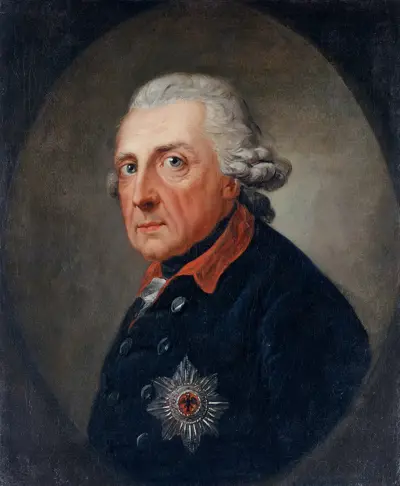
Frederick II was a Prussian king and military leader who ruled the Kingdom of Prussia from 1740 until 1786, reigning longer than any other Hohenzollern king. His most significant accomplishments during his reign included his reorganization of Prussian armies, his military successes in the Silesian wars and the Partitions of Poland, and his patronage of the arts and the Enlightenment. Frederick was the last Hohenzollern monarch titled King in Prussia and declared himself King of Prussia after annexing strategic parts of the Polish–Lithuanian Commonwealth in 1772. Prussia greatly increased its territories and became a leading military power in Europe under his rule. He became known as Frederick the Great (German: Friedrich der Große) and was nicknamed "The Old Fritz" (German: "Der Alte Fritz") by the Prussian people and eventually the rest of Germany.
