Guillermo Cabrera Infante Quotes
My mother had been educated at a convent, and she had been converted to communism by my father during Stalin's most rampant period, at the beginning of the 1930s. So she had two gods, God in heaven and god on earth.
Cabrera Infante, Guillermo. Interview by Alfred Mac Adam. "Guillermo Cabrera Infante, The Art of Fiction No. 75." The Paris Review, no. 87, Spring 1983.


After the 1917 Russian Revolution many of the Western Countries sent troops to Russia where they aided the Whites against the Reds. When the Red Bolsheviks prevailed, there were many attempts to diplomatically and economically undermine the Communist government. This caused a unity among different Russian factions. Sforza urged leaving them alone and letting the Bolsheviks fail by their own ideology. Most Western nations and the United States did not agree with him.


Seeger’s admission was typical of tens of thousands of Americans who had become disillusioned with the fairness, equity, and effectiveness of capitalism during the depression. They were easy prey for Communist propaganda which pointed out all the problems in American society from legal racial discrimination to lack of a social safety net while at the same time lying about the Russian achievements and hiding the horrible abuses of human rights—especially the political murders of millions of people. Then the truth about Russia emerged, Seeger and so many others abandoned the Communist Party as at the same time America was improving its society and beginning to try and deal with the great problem that had plagued America from its inception—racism and slavery.

This was only 6 years after the Russian Revolution. Communist Russia had extended its influence to much of the world without firing a shot. To many, communism looked like the future. The Russian inability to make communism work economically in the next 70 years destroyed most of its influence.

Vladimir Lenin. While Lenin was of this view, Stalin and other hard liners disagreed. They not only imposed their brand of communism on their own people via force with terrible consequences for any dissidents, but the Soviet Army imposed Communism on most of the states of Eastern Europe, and those states in turn used their Armies and secret police to impose it on their own citizens.

See the Related Quotation for a good contemporary example of the clerics whop were party tools.

Moody was an avid Protestant Evangilical. The reference to the "reign of terror" was not to the French Revolution per se but to a national calamity of the severity and magnidute of the French Revolution sd God's wrath would be triggered if more AMericans were not Evangelized. What is particualry interestting is by 1886 Communism had already developed a bad reputation in the part of many religious fundamentalists and considered a sin of the first order such as adultery. The red scare was alive and well. Ironically, Moody and most other anti-communism evengelicals were not hostile brecause of Karl Marx's economic or historical views and theories, but rather Marx's, Engels', and other early Communitists hostility to organized religion was the main casue. The economic adn political opponents of Communism enlisted the aid of as many religious people was possible by emphasing "Godless Communism" and the vast majority of Americans at the time, if they knew anything about Communism at all, it was that the communists were hostile and opposed to religion.


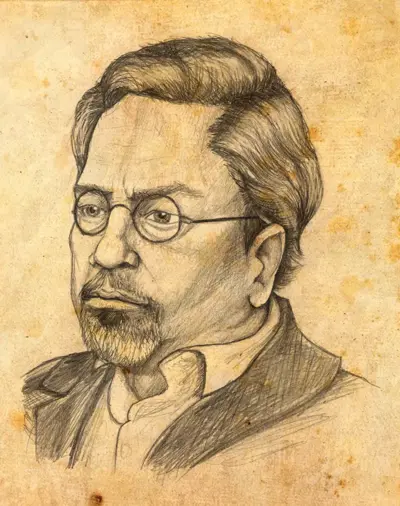
Guillermo Cabrera Infante was a Cuban novelist, essayist, translator, screenwriter, and critic; in the 1950s he used the pseudonym G. Caín, and used Guillermo Cain for the screenplay of the cult classic film Vanishing Point (1971).
