Whittaker Chambers Quotes
The Communist vision is the vision of man without God.
Chambers, Whittaker. Witness. Random House, 1952, p. 9.


Unlike most of his televangelist successors, Sheen was very ecumenical. He was clearly Catholic but had a very significant Protestant and Jewish Audience.


He had asked a family friend not to bring books by Hemmingway into his home. The friend asked why and received this answer. Koch and his brother were the largest political contributors in the United States, so they had enormous influence on Republicans (they only made political contributions to conservative organizations).

The reason this is an important quotation is that since the end of WWII, most Americans have used the term “socialism” rather loosely. President Obama for example is often referred to as a socialist by his political enemies. Conservatives refer to Norway, Sweden and Denmark and other European nations as socialist states. But none of them would ever meet the definition of a socialist state of the major socialist state in history. After WWII, the Russians intimidated many of the Eastern European with force of arms and there were some other socialist states for a while but the all abandoned Soviet style Russian socialism, Ironically, the only state that the old Russian Communists would recognize in 2011 was Cuba. However, there are many who call themselves socialists who would never agree that the Soviet Union was remotely a socialist state—they see it as a Fascist dictatorship.


Hoover’s testimony not withstanding, communism in America never did spread like an epidemic.

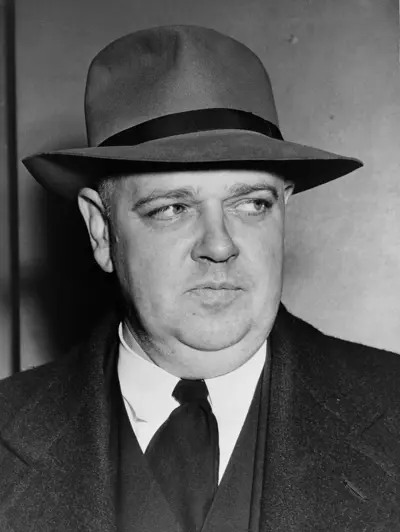
Whittaker Chambers was an American writer-editor, who, after early years as a Communist Party member (1925) and Soviet spy (1932–1938), defected from the Soviet underground (1938), worked for Time magazine (1939–1948), and then testified about the Ware group in what became the Hiss case for perjury (1949–1950), often referred to as the trial of the century, all described in his 1952 memoir Witness. Afterwards, he worked as a senior editor at National Review (1957–1959). US President Ronald Reagan awarded him the Presidential Medal of Freedom posthumously in 1984.
