Deborah Sampson Quotes
My mind became agitated with the enquiry - why a nation, separated from us by an ocean more than three thousand miles in extent, should endeavor to enforce on us plans of subjugation, the most unnatural in themselves, unjust, inhuman in their operations, and unpractised even by the uncivilized savages of the wilderness?
Gannett, Deborah Sampson. An Address, Delivered with Applause, at the Federal-Street Theatre, Boston. H. Mann, 1802, p. 7.


Doty acquitted Chief Oshkosh who had murdered another Indian in retaliation of the murder of one of his tribe. Under the Indian customs of the time, revenge killings were normal and expected. The white citizens were outraged and voted Wisconsin’s first judge out of office. He later became Governor of the territory and when Wisconsin became a state, Doty became its Congressman.

The Center is in Holland. Chouket is Tunisian


Southern secession and the Civil War This is one of the major quotations with which historians rebut the revisionist view that the Civil War was about States’ Rights or other economic factors.


Two senior Chinese officials Yuan Ch`ang and Hsu Ching-ch`eng, realizing the implications and the vengeance the Western Powers would take on the Empress and China if the order were carried out, rewrote it to require that all foreigners be “protected.” This version went out to all governors except that of Shansi who had received a previous execution order {612690} . When the Empress discovered the change, Yuan Ch`ang and Hsu Ching-ch`eng were both summarily beheaded. However they saved thousands of Western lives and China from an even greater disaster.


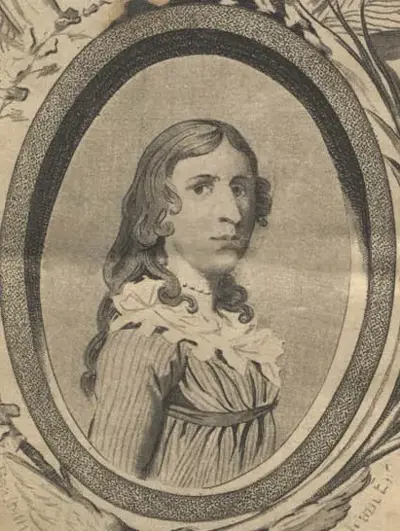
Deborah Sampson Gannett, better known as Deborah Sampson, was a Massachusetts woman who disguised herself as a man in order to serve in the Continental Army during the American Revolutionary War. She is one of a small number of women with a documented record of military combat experience in that war. She served 17 months in the army under the name "Robert Shirtliff" (also spelled in various sources as Shirtliffe and Shurtleff) of Uxbridge, Massachusetts, was wounded in 1782, and was honorably discharged at West Point, New York in 1783.
