Elizabeth I Quotes
My loving people, we have been persuaded by some, that are careful of our safety, to take heed how we commit ourselves to armed multitudes, for fear of treachery; but I assure you, I do not desire to live to distrust my faithful and loving people. Let tyrants fear; I have always so behaved myself that, under God, I have placed my chiefest strength and safeguard in the loyal hearts and good will of my subjects. And therefore I am come amongst you at this time, not as for my recreation or sport, but being resolved, in the midst and heat of the battle, to live or die amongst you all; to lay down, for my God, and for my kingdom, and for my people, my honor and my blood
Centuries later leaders have studied this speech and the actions taken by Elizabeth as the epitome of model leadership and morale building at a time of crisis. What made the event more dramatic were two monarchial norms of the time understood by all the citizens. Monarchs did not open themselves to the risk of very close proximity to their armies with only a handful of retainers. A dissident military commander could kill or capture the monarch as most soldiers had little loyalty to anyone but the commander who paid them. Second, monarchs usually abandoned battlefields where the outcome was uncertain and if not present certainly stayed away. Elizabeth in breaking both these norms was taking obvious risks with her own life (as a women for whom it was even more unexpected) and welfare to share the immediate fate of her subjects. It explains why an absolute monarch was extremely popular with her subjects—great leadership.
Elizabeth I, 1533-1603, Queen of England, Speech to her troops in the field preparing to defend against the invasion of the Spanish Armada, 1588
Sourced by: Eigen's Political and Historical Quotations

Ataturk had been a military hero, but was very much opposed to war and military adventurism not unlike the Dwight Eisenhower and Colin Powell type leaders. However, the one thing that he thought worth the sacrifice of his own and other Turkish lives was Turkish independence and sovereignty. Historically, the Ottoman Empire which Ataturk finally ended, had dominated half of Europe and all of the Mid East at the cost of sovereignty of other nations and Ataturk saw no more important virtue with dying for than national sovereignty. See {125322} and {584501}.
Ataturk was a young major at the time commanding troops of a weak and corrupt Ottoman regime. However a combined English and French (the strongest military powers in Europe) invasion of the Gallipoli Peninsula threatened to capture the Turkish capital, Constantinople. Ataturk alone rallied the Turkish defenders and fought the invaders to a standoff in long drawn out battle with huge casualties on both sides. Ataturk became a national hero. Although Ataturk thereafter was very reluctant to use military force or endanger troops, the thing he always thought worth the supreme sacrifice (including his own) was the independence and sovereignty of the nation. See {584502} for his continuing belief in this type of sacrifice.


A Federal Naval flotilla was preparing to attack South Carolina Forts Beauregard and Walker in the area of Hilton Head and Port Royal. The navy took both forts the next day with their naval bombardment so powerful that the Confederate Rebels had to abandon both forts gaining a kind of revenge for the Confederate capture of Fort Sumter at the war’s beginning.

He always appeared in a military uniform after that.

After hearing that Speaker Thomas Reed's bid for the presidential nomination was thwarted by Mark Hanna in favor of William McKinley, Fessenden remarked to Joseph Homan Manley, chairman of the Republican National Committee:

This speech is often referred to as her “Golden” or “Farewell” speech. It was her last Parliament.
This would be like an American President firing the congressional chaplains. However this is only one small, but telling, example of Atatuk’s secularization of the nation which had a great deal to do with Turkey becoming a modern great power—by far the strongest and most developed of the Islamic world.


An example of this was the landing in the beaches of Normandy in WWII. Once on the beaches the allied troops had to win or die. Some of the most heroic fighting in American and English military history occurred on those beaches. Another was the Spanish Explorer Hernando Cortez who after landing in the New World, had his ships burned so that he and his soldiers had to conquer or they would die.


Attila the Hun. The Romans aided by Theodoric, King of the Visigoths, fought the Huns in the only battle that Attila ever lost which he lost badly. There were 165,000 men killed in an afternoon. The Roman General, Flavius Aetius, had been a boyhood friend of Attila’s and had fought with him against the Visigoths. The Romans had Attila trapped but his old friend let him escape with just a good thrashing to his ego and army as to not upset the balance of power and tilt it in favor of the Goths. Roman foreign policy at the time was to keep all the Barbarians strong enough to fight one another so that none would be dominant but all weaker than Rome. Divide and conquer.
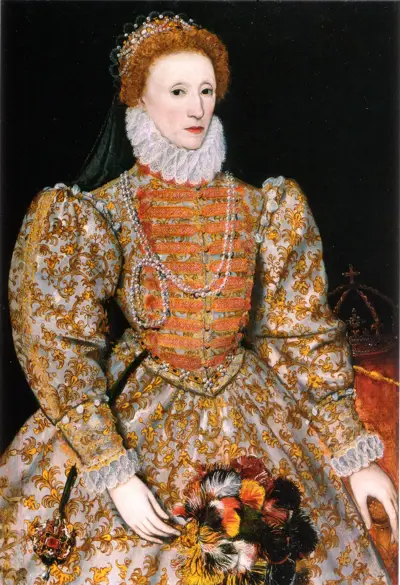
Elizabeth I was Queen of England and Ireland from 17 November 1558 until her death in 1603. Sometimes called the Virgin Queen, Gloriana or Good Queen Bess, Elizabeth was the last of the five monarchs of the House of Tudor.
