David Mamet Quotes
My dad was a labour lawyer, and the ideas that I grew up with - bad management, bad capitalism, robber barons - when I applied this to my own life, I saw that we are all on both sides of the coin.
Mamet, David. The Secret Knowledge: On the Dismantling of American Culture. Sentinel, 2011.


Commenting on the 1886 Knights of Labor strike.


Labor unions as we know them did not then exist. Calhoun and many others saw the struggle as a inherent class struggle, not unlike that particular view of Karl Marx. See {606584} for one his more extreme views on the subject.


This futuristic work attempted to project American life in the year 2000—then 112 years in the future. It is remarkable how many elements he successfully predicted. In this quotation a character in 2000 looks “backward” and correctly describes what occurred well after Bellamy’s death. This prediction describes the early 20th century quite well.

At the time, it did seem impossible that labor and capital would ever have harmonious relations. But the notion that slavery would solve the problem is as preposterous as anything ever entered into the American political dialogue. But there were many in the South, and some in the North, who actually believed it. Even 150 years later, while labor and capital relations were much better than pre Civil War, they still could not be described as “harmonious” or “friendly”.

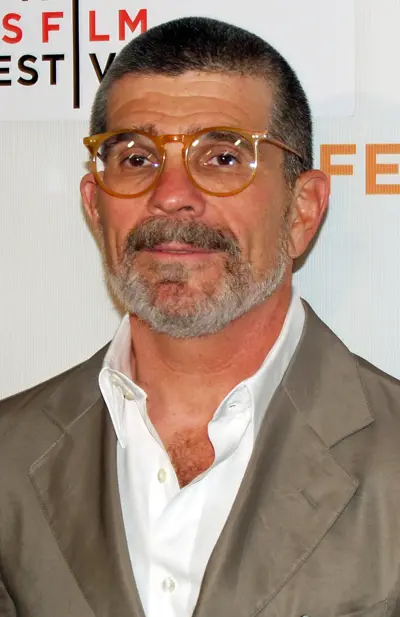
David Alan Mamet is an American playwright, film director, screenwriter and author. He won a Pulitzer Prize and received Tony nominations for his plays Glengarry Glen Ross (1984) and Speed-the-Plow (1988). He first gained critical acclaim for a trio of off-Broadway 1970s plays: The Duck Variations, Sexual Perversity in Chicago, and American Buffalo. His plays Race and The Penitent, respectively, opened on Broadway in 2009 and previewed off-Broadway in 2017.
