John C. Calhoun Quotes
It would be well for those interested to reflect whether there now exists, or ever has existed, a wealthy and civilized community in which one portion did not live on the labor of another.... Remember that labor is the only source of wealth, and how small a portion of it, in all old and civilized countries, even the best governed, is left to those by whose labor wealth is created.
John C. Calhoun, 1782-1850, Vice President of the United States (Democrat, SC), U. S. Congressman & Senator (Democrat, SC), Quoted in Hofstadter, The American Political Tradition, Vintage 1948
Sourced by: Eigen's Political and Historical Quotations


In his economic view, managers, accountants, attorneys, owners, shareholders, landlords, were all supported by the workers who have to support themselves and all the others.


Labor unions as we know them did not then exist. Calhoun and many others saw the struggle as a inherent class struggle, not unlike that particular view of Karl Marx. See {606584} for one his more extreme views on the subject.


Worry about the disproportional power of the rich is not a modern concern, but was a concern from the very beginning of the nation. There was a belief that if there were a legislative body representing the entire population the rich would tend to dominate it. The solution that England had found was a bicameral Parliament—a House of Lords representing the wealthy and the powerful and the House of Commons, representing the bulk of the people. America followed suit but never did have the class distinction of England.

The factory workers in Lynn, Massachusetts started their own newspaper: This was published four years before Marx and Engles published the Communist Manifesto

Chesterton preceded by almost half a century much of the intellectual dispute of the War on Poverty of the 1960’s where much of the middle and upper class tried to change a variety of behavior patterns and customs and values of the poor.


The “competition of the poor included the political and social activism competition.”


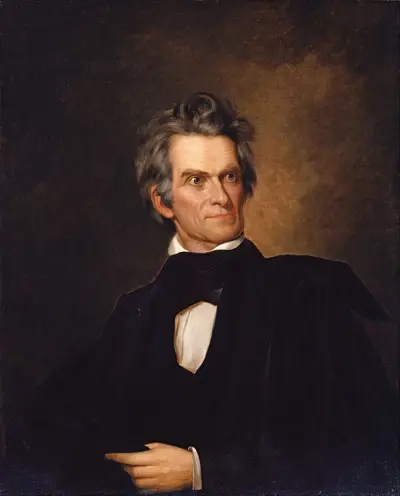
John Caldwell Calhoun was an American politician and political theorist from South Carolina who held many important positions including being the seventh vice president of the United States from 1825 to 1832, while adamantly defending slavery and protecting the interests of the white South when its residents were outnumbered by Northerners. He began his political career as a nationalist, modernizer, and proponent of a strong national government and protective tariffs. In the late 1820s, his views changed radically, and he became a leading proponent of states' rights, limited government, nullification, and opposition to high tariffs. He saw Northern acceptance of those policies as a condition of the South remaining in the Union. His beliefs and warnings heavily influenced the South's secession from the Union in 1860–1861.
