Feargus O'Connor Quotes
My children, have now for a quarter of a century been mixed up with the democratic movement -- in Ireland since 1822, and in England from the year 1833. I have always, in and out of Parliament, contended for your rights, and I have received more than 100 letters, telling me not to come here today, or my life would be sacrificed. My answer was, that I would rather be stabbed in the heart than abstain from being in my place. And my children, for you are my children, and I am only your father and bailiff; but I am your fond father and your unpaid bailiff. My breath is nearly gone, and I will only say, when I desert you may desert me. You have by your conduct today more than repaid me for all I have done for you, and I will go on conquering until you have the land and the People's Charter becomes the law of the land.
Feargus O'Connor, 1794-1855, Irish Member of the British Parliament, Publisher & Chartist leader, Speech at Kennington Common, April 10, 1848
Sourced by: Eigen's Political and Historical Quotations


He had just been released from jail for urging mass demonstrations to prevent tenant farmers from being evicted.


He was elected to Parliament while in jail and never took his seat as he died of a hunger strike in jail.


There had been no tradition of self government or even rights in Germany and some like Hamilton thought that the immigrants from such a totalitarian tradition would not handle the relative freedom of America. They were wrong.


At this point in the convoluted history of Irish-English politics, the majority of the Irish upper class and members of Parliament were large landholders whose estates had been accumulated and legalized under English


He advocated no cooperation with the British Colonial Administration which depended on Indian officials, administrators, clerks and other workers. The boycott strategy never worked in this case, but civil disobedience did. Boycott did work against the apartheid regime in South Africa a half century later however.


In most revolutionary settings leaders have to persuade people who have voted with no success to turn to the rifle. In Ireland at this point, almost all the nationalsits knew that the rifle would help them but they were not sure that a vote would have the effect of a bullet.


The Chief Secretary, Lord Castleregh, had put forward a resolution to bring about the unification of Great Britain and Ireland under the single British Parliament at Westminster. He and his allies had bribed a number of the Irish MPs to support the union. With Union some Irish MPs would then be able to win seats representing Ireland in the British Parliament. Although Grattan and most of the Orangemen opposed the Union, 4 months later, the bill passed comfortably. Ironically, Grattan was one of the Irish MPs whose popularity won a seat in the unified British Parliament.

He was executed by the English for his part in the Easter Uprising. Given to his daughter Nora Connolly on eve of his execution by the British.

Independence and Free Trade the two issues closest to his heart.
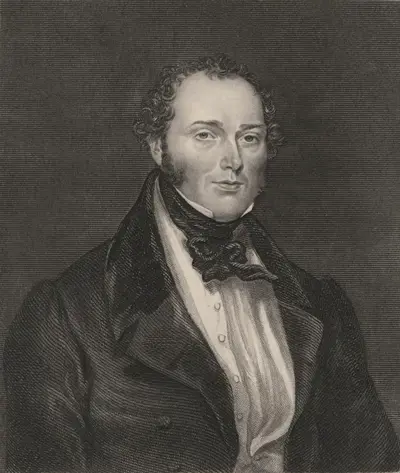
Feargus Edward O'Connor was an Irish Chartist leader and advocate of the Land Plan, which sought to provide smallholdings for the labouring classes. A highly charismatic figure, O'Connor was admired for his energy and oratory, but was criticised for alleged egotism.
