Frederick Douglass Quotes
Mr. Lincoln was not only a great President, but a great man — too great to be small in anything. In his company I was never in any way reminded of my humble origin, or of my unpopular color.
Frederick Douglasss, ~1817-1895, Abolitionist & Editor, Recorder of Deeds, District of Columbia, U. S. Minister to Haiti, The Life and Times of Frederick Douglasss, Part 2, Chapter 12, 1892
Sourced by: Eigen's Political and Historical Quotations


Arkansas Governor Faubus ordered the national guard to prevent Black students from integrating Central High School in Little Rock. President Eisenhower was a man of action and not rhetoric and his lack of firm public statements overlooked an opportunity to use the Presidential “bully pulpit” and exercise his moral leadership and authority. Armstrong was irate at Eisenhower for appearing to do nothing and say nothing. See {615852}. When Eisenhower did enforce the court order and used Federal troops, Armstrong sent him this congratulatory telegram. His reference to walking into the schools was in support of many who suggested that the best thing the President could have done was to personally take one of the Black students by the hand and walk into the school with him or her. With the mood of the Southern racists, such an act was potentially very risky for the President and it is not known whether of not the President and his staff ever considered such an act.

This newspaper editorial has historical importance for two reasons. First, it is yet another proof that the sole reason for southern secession was slavery. Second, note the implication that Lincoln had Negro ancestry. As that could be the only reason that he would hold his views on slavery. This disreputable tactic of slandering opponents who hold different views have extended to German ancestry in WWI, Catholic religion, communist affiliation, and in one of the more recent examples, the accusation—believed by a number of Americans, that President Obama was a secret Muslim.

While there were many Americans who were not ready, the majority surprised most of the world, and even many who disagreed with his policies approved of him and liked him.


Taft, very progressive on racial matters, was a little too optimistic. The “intelligent” Southerners were in the small minority. Only a week after Taft made this statement, Joseph Gorden, a Negro, was lynched outside Greenwood, Mississippi.
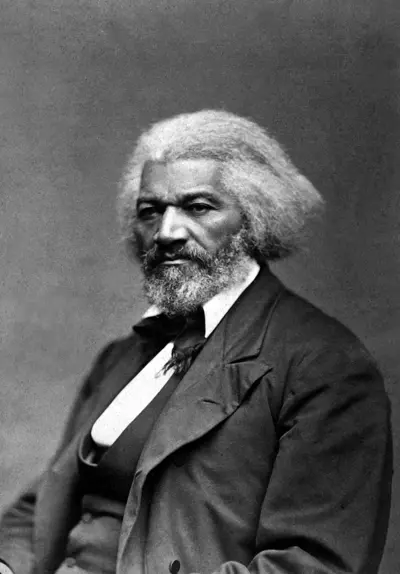
Frederick Douglass was an American social reformer, abolitionist, orator, writer, and statesman. After escaping from slavery in Maryland, he became a national leader of the abolitionist movement in Massachusetts and New York, becoming famous for his oratory and incisive antislavery writings. Accordingly, he was described by abolitionists in his time as a living counterexample to slaveholders' arguments that slaves lacked the intellectual capacity to function as independent American citizens. Likewise, Northerners at the time found it hard to believe that such a great orator had once been a slave.
