Herbert Hoover Quotes
Most ex-Presidents would be glad to become ex-officio members of the Senate without a vote.
Herbert Hoover, 1874-1964, 31st President of the United States (Republican, IA), Commenting on a proposal that ex-Presidents become ex-officio members of the Senate, NBC Meet the Press, 1959
Sourced by: Eigen's Political and Historical Quotations


The Supreme Court had decided to hear an important case on gun rights. Cheney discovered that Solicitor General, the Administration’s chief lawyer before the Supreme Court, Paul Clement planned to file a brief that was very different from Cheney’s own personal views. In protest, he signed his name to a much stronger brief filed by 55 pro-gun senators and 250 members of the House of Representatives. The President’s Chief of Staff called Cheney on the carpet for doing something that was unforgivable—the Vice President had publicly criticized the position that the President’s (and the Vice President’s) chief lawyer was taking. This was Cheney’s excuse—ie that he was not protesting as the Vice President but as President of the Senate, the only other Constitutional Role of the Vice President. Bolton let the vice president know that if he ever tried something like this again, he would be frozen out of most government activities. See {633772} . In Bush’s second term Cheney had less and less influence, in part because of his unethical behavior like this.


When Lyndon Johnson was elected Vice President he, as the former Senate Majority Leader, wanted to lead the Democratic Senate Caucus. Gore objected because he thought that violated the separation of powers between the Executive and the Legislative branches, and he wanted the Senate to be independent from the administration. Despite Gore’s objection, Johnson was elected.

From this quotation, {624648} and {615902} it is clear that the framers of the Constitution intended the treaty making powers to be shared by the President and the Senate. In practice, in modern times treaties are usually initially negotiated by diplomats under the supervision of the President and the Senate gets to concur or not in the ratification process. However, there have been a number of treaty failures including the League of Nations where the lack of coordination has resulted in a situation where the Senate had to accept or reject something which the President had negotiated and the Senate rejected the treaty.


The sarcasm refers to the power usually held by key committee chairmen and the influence of the White House on Congressional legislation—especially budgetary.


When the Senate was debating the Gulf of Tonkin Resolution, which would empower the President to take "all necessary measures" to repel any armed attack on U. S. forces, Senator Morse was one of only two Senators opposing the resolution:


The issue of how the federal judiciary would be selected was one of the more hotly debated issues during the Constitutional Convention.
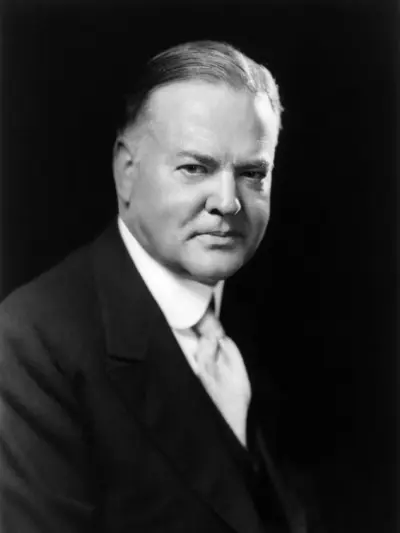
Herbert Clark Hoover was an American politician, businessman, and engineer, who served as the 31st president of the United States from 1929 to 1933. A member of the Republican Party, he held office during the onset of the Great Depression. Before serving as president, Hoover led the Commission for Relief in Belgium, served as the director of the U.S. Food Administration, and served as the third U.S. Secretary of Commerce.
