Benjamin Griffith Brawley Quotes
More and more, however, in any study of Negro insurrections it becomes difficult to distinguish between a clearly organized revolt and what might be regarded as simply a personal crime.
During the slavery era, the Southern slave holders and politicians were always fearful of the possibility of slave uprisings. In most cases, they were dealt with locally with little attempt to share the information lest other slaves be motivated to follow the practice. In addition many of the slave rebellions of very small groups and individuals were not treated as a slave revolt or protest but was considered the act of a “bad apple” that was dealt with. Further, as much as the slave owners feared slave revolts, they also had a large investment in their slaves and executing all who might have supported a rebellion of a few could cost them a great deal of money or even bankrupt them. Therefore there was always a tendency to kill the leaders but provide lesser punishment for the others so that they could survive and return to work. All these factors have made it very difficult to accurately estimate the extent of slave revolts and protests in the ante-bellum South.
Benjamin Griffith Brawley A Social History of the American Negro 1921
Sourced by: Eigen's Political and Historical Quotations

His fear was well founded. That is exactly what the British tried to do.


The last lines of the editorial were tragically accurate in predicting the Civil War. The more the slavery question was debated in the nation, the more polarized the country became. If the South would persist in trying to curtail men’s freedom and maintain slavery, the slaves had the same right of revolution and insurrection as was established in the American Revolution. That was the view of most abolitionists. Southern slave holders, feared an armed slave rebellion more than anything else, and observed that debating the issue of slavery was just riling up Blacks and whites and would instigate such armed revolutions. The Southern solution was to cease debating the slavery question. The Northern solution was to end slavery. Neither side would accept the solution of the other and the Civil War ensued.

The racial inequality did cause a Black revolution in the 1960s. The arrival and influence of Martin Luther King, at the time Black revolution might have turned violent, and the willingness of a substantial number of whites to implement the Civil Rights revolution functioned as a safety valve so that there was substantial reform towards much more racial equality.

Darwin was then a very young man, who had personal witnessed the slavery in South America and the Caribbean when he was on his famous expedition on HMS Beagle. See {630961} & {630962}. He was so disgusted with slavery that he hoped there would be armed slave revolutions and takeovers as had occurred in Haiti. Many of the English upper classes were radical when it came to slavery.


There indeed were although the Southerners tended to exaggerate the numbers. However, the more slavery was debated, the more many of the abolitionists came to believe that insurrection and slave rebellion was not only morally justified but was the only recourse that was left by the racist intransigence of the Southern slave holders and politicians.

Kennedy was initially very opposed to a civil rights march on Washington and seemed very annoyed to the Blacks in attended. But when faced with the reality of the fact that the March was going to take place and he could not prevent it, he turned around and did everything he could do to protect the marchers and enable the historic event.

What America just could not believe that American Negroes were not satisfied with their second class status. So any organized Negro unrest must be caused by un-American and foreign influences or those of radicals like Socialists. The Socialists were among the first organized political groups to condemn the racism and discrimination of the day. Later, even at the crux of the civil rights movement in the 1960s, most Southerners maintained that all the dissatisfaction and unrest of Negroes was the result of “agitators,” “foreigners,” “socialists,” and “communists.”

Lincoln had instituted the first draft in American History and it was terribly resented by many Americans. The draft laws allowed the wealthy and upper middle class to avoid service by paying a $300 fee of hiring a substitute just like in the Vietnam War the upper classes could get College Draft deferments. The mob led mostly by poor Irish, began by protesting the draft; then they attacked the mansions and houses of the wealthy; and then they went after Blacks. The Irish poor feared large numbers of Negroes coming out of slavery and competing for their jobs and lowering the prevailing wages. Blacks were beaten and lynched and 5,000 almost half of the then Negro population were driven to Brooklyn, New Jersey and the New York suburbs. It was the worst riot in United States History.


The Reference to St. Domingo refers to the slave rebellion in Haiti, the first major, and successful slave revolt in the Western Hemisphere. The revolution was characterized by the revenge taken against the former slave masters. Thomas Jefferson, then the President, refused to recognize the new government and actually boycotted it. He and most Americans at the time were fearful that a slave revolt in the U. S. would produce revenge attacks against former masters, and indeed the national government supported the slave owners in subjugating all attempted armed rebellion. This reached its zenith in the Federal troops putting down the John Brown attempted revolt at Harpers Ferry. Instead of the bloodshed of a slave revolt, America experienced the bloodshed of a Civil War.
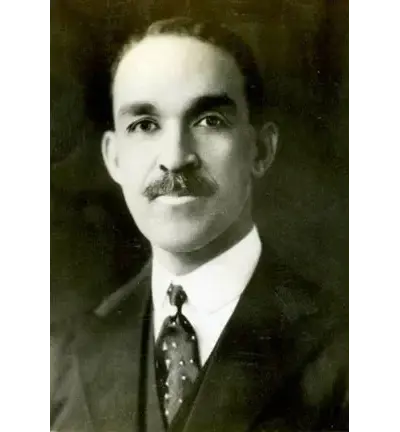
Benjamin Griffith Brawley was a prominent American author and educator. Several of his books were considered standard college texts, including The Negro in Literature and Art in the United States (1918) and New Survey of English Literature (1925).
