Napoleon Bonaparte Quotes
Money has no motherland; financiers are without patriotism and without decency; their sole object is gain.
Leaders of nations for years only trusted as truly patriotic those man—usually nobles of the aristocracy—who owned land. If an invader came and seized their land, they would lose their wealth. However money is fungible, and a banker can easily move his money abroad and join another nation or side in a war. If the country is ruined by war, the manufacturer cannot obtain labor or raw materials, The financier depends on none of these and so hs not the vested interest in the welfare of the nation.
Napoleon Bonaparte, 1769-1821, [Napoleon Bonaparte], Military leader and Emperor of France, Quoted in Patrick S. J. Carmack, The Money Masters, 1995
Sourced by: Eigen's Political and Historical Quotations


There is a very interesting parallel with the views and statements of FDR at the same time.


Roosevelt believed that the person who just made money was sorely lacking and he had a duty to the society and the country that went beyond money. Much of the upper class though him a prig and resented his criticism.

This statement during the First World War so frightened the Woodrow Wilson administration that they jailed Debs for saying it and other similar statements like {640245}. The statement was generally suppressed with few newspapers carrying it. The problem for the administration was that enlistments might decrease and force them to draft the wealthy and their sons which was, with very few exceptions, not acceptable to the “upper classes”.


The two politicians were amazed as they learned more and more about some of industrial leaders of the country. This is the language they used in private communications.


One of the contradictions of capitalism is that at many points in history capitalism has caused and/or contributed to great death and suffering. However, that same capitalism has led to the development of science, technology, agronomy, medicine and education which has saved and preserved millions of lives and raised the standard of living more than anything else.
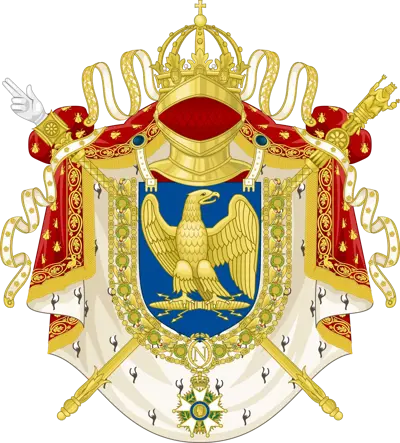
Napoléon Bonaparte was a French military and political leader of Corsican descent. He rose to prominence during the French Revolution and led several successful campaigns during the Revolutionary Wars. As Napoleon I, he was Emperor of the French from 1804 until 1814, and again in 1815. Napoleon dominated European and global affairs for more than a decade while leading France against a series of coalitions in the Napoleonic Wars. He won most of these wars and the vast majority of his battles, building a large empire that ruled over continental Europe before its final collapse in 1815. One of the greatest commanders in history, his wars and campaigns are studied at military schools worldwide. He remains one of the most celebrated and controversial political figures in human history.
