Anatole France Quotes
You believe you are dying for the fatherland—you die for some industrialist.
Jacques Anatole Francois Thibault
Anatole France 1844-1924, Nobel Laureate in Literature [France], Quoted in Van Passon, Days of Our Years
Sourced by: Eigen's Political and Historical Quotations


This was one of the statements that he was jailed for during WWI.

The “old” writing to which he was referring was a quotation from Roman Poet Horace. See {589060}.

Ataturk had been a military hero, but was very much opposed to war and military adventurism not unlike the Dwight Eisenhower and Colin Powell type leaders. However, the one thing that he thought worth the sacrifice of his own and other Turkish lives was Turkish independence and sovereignty. Historically, the Ottoman Empire which Ataturk finally ended, had dominated half of Europe and all of the Mid East at the cost of sovereignty of other nations and Ataturk saw no more important virtue with dying for than national sovereignty. See {125322} and {584501}.

The Congress had applauded his message vigorously.

Quintus Horatius Flaccus

Quintus Horatius Flaccus. This famous quotation has been echoed in virtually every language and every country of the world. However, see Ernest Hemingway for a counter view.

The Poles were fighting the Russians. Pulaski was a Field Marshall. This was before he had come to America and fought in the American Revolution.


The last phrase was a variation of the famous Bismarck quotation {594849}.

Even as he was being executed for his many war crimes, the Field Marshal exhibited the mental perspective of Germanic patriotism that had brought Europe as well as Germany itself so much death and ruin.


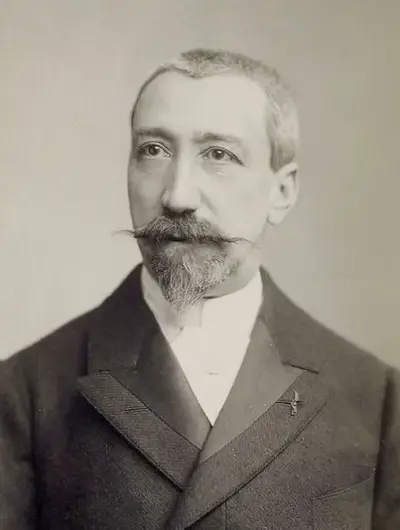
Anatole France was a French poet, journalist, and novelist with several best-sellers. Ironic and skeptical, he was considered in his day the ideal French man of letters. He was a member of the Académie française, and won the 1921 Nobel Prize in Literature "in recognition of his brilliant literary achievements, characterized as they are by a nobility of style, a profound human sympathy, grace, and a true Gallic temperament".
