Mary Wollstonecraft Quotes
Men neglect the duties incumbent on man, yet are treated like demi-gods; religion is also separated from morality by a ceremonial veil, yet men wonder that the world is almost, literally speaking, a den of sharpers or oppressors.
Wollstonecraft, Mary. A Vindication of the Rights of Woman. J. Johnson, 1792, p. 317.


A nonjuror was a cleric of the Church of England or the Episcopal Church of Scotland who refused to take a loyalty oath to William & Mary.

Ingersoll was considered to be the greatest orator and political thinker of his day, but his overt atheistic views curtailed his elected political career.


He was referring to governments that imposed some form of morality in their citizens. Free governments do no dictate a morality and require their citizens to follow it. He was very much opposed to Prohibition which he saw as a poor government—Herbert Hoover’s Administration—which was imposing its narrow morality on all. He was very suspicious of government actions where the government claimed that the action was for moral objectives. This is a classic Libertarian view. In general, it is Fundamentalists and ideologues who want to impose their particular morality on all. See {620693} for a related idea.

As absurd as this sounds to us today, it was a commonly held belief by Aristocrats, and upper class people in many societies. Some ultra conservatives in Democracies and Dictators like Franco and Mussolini.


L. P. Jacks. This seems to be a constant refrain of clergy. philosophers and other intellectuals in almost all eras and nations.

Justifying his support of the Hyde Amendment prohibiting Federal funds to be used to perform abortions. Carter was normally a staunch defender of equal opportunity for the poor, but the Hyde Amendment de facto prohibited poor women from exercising their rights to have abortions while middle class and wealthy women could exercise that right.. The hypocrisy was difficult for him to explain.


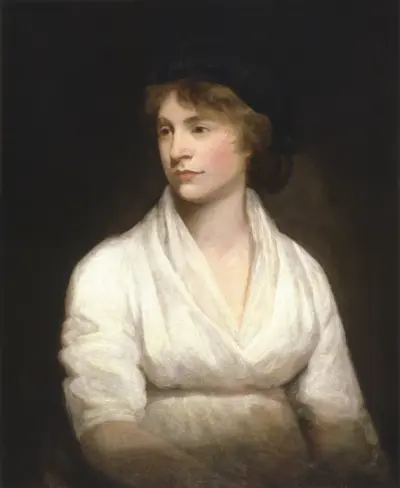
Mary Wollstonecraft was an English writer, philosopher, and advocate of women's rights. Until the late 20th century, Wollstonecraft's life, which encompassed several unconventional personal relationships at the time, received more attention than her writing. Today Wollstonecraft is regarded as one of the founding feminist philosophers, and feminists often cite both her life and her works as important influences.
