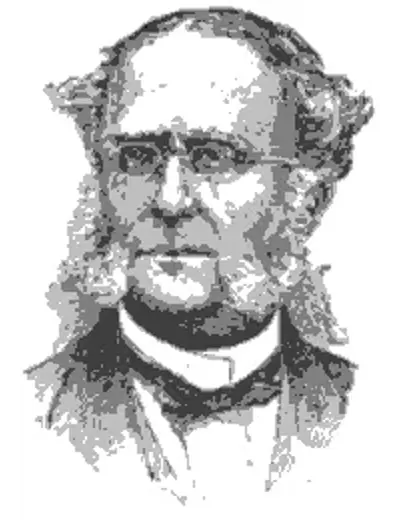
Edmund Quincy Quotes
How different has been the course pursued by the Unitarian party. How few of that numerous body, powerful from wealth and education, whether ministers or laymen, have placed themselves by the side of the suffering bondman. The freedom of discussion, which was fearlessly applied to metaphysical doctrines and theological subtleties, was found to be a dangerous weapon when it was used for the examination of an institution, the ramification of which entwined themselves around every altar of mammon worship
Edmund Quincy, 1808-1877, Abolitionist, Historian & Editor, Son of Josiah Quincy, Letter to William Ellery Channing Dedham, April 12, 1840
Sourced by: Eigen's Political and Historical Quotations

This moral statement from a New jersey Quaker abolitionist is not particularly noteworthy, However what makes this quote important is that Woolman traveled throughout the South preaching this as his main theme. At that time — before the American Revolution — he did so and was not attacked or intimidated; he was mostly ignored by the Southern authorities. At the time, the South was very confident of its ability to continue slavery. Years later, when the abolition movement grew larger and stronger, a Northern Quaker Preacher doing this not not escape with his life.


The Roman Catholic Church in America had a very difficult problem with slavery. Catholics were themselves a minoirty, hated and distrusted by many Protestants. In most of the country, the distrusr was based on their large immigrant population, but in the South Catholic theology was hated and the Vatican and Pope were particular targets. The Catholic Clergy generally did not want to take sides in the most contentious issue in America since its inception. The Southern Catholic Clergy did not have that option as in the South, anyone who was not a supporter of slavery was an "enemy of the community and subject to all kinds of violence." Some Southern priests were willing to take the personal risk but did not want to put their followers at risk. In a strange consequence, Catholics--especially Irish Catholics--fought on both sides of the Civil War and often against each other. While it was not an exemplary moral behavior for the Church, there were difficult pressures on Catholic leaders. Further, most of the lowest and most difficult, undesirable jobs were filled by Catholics and most Catholic laymen so and end to slavery as the start of pitting the Catholics against the Blacks. So there was not a groundswell for abolition in most Catholic parishes even in the North.

The country had been completely polarized by 1854. It was only a matter of time for something like the Civil War to break out. The impossibility of compromise was not just held by radicals like Garrison but after the Compromise of 1850 fell apart, most politicians on both sides s

Observation of the other fugitives in Canada

As an entertainer she had toured much of the world and seen American slavery and that of some other nations. She became a staunch abolitionist and like entertainers in the 20th and 21st centuries she used her celebrity to give anti-slavery lectures and perform for audiences where she donated the proceeds of the event to the abolition cause. She is a particularly interesting political figure in that she seems to be one of the first entertainers to perform for a social cause and become an activist.

Throughout the history of American Slavery, the Southern apologists for slavery have accused abolitionists and anyone opposed to slavery of being Communists, Atheists, or any other group that was generally unpopular in the day. This is one of the early instances where that heinous practice was started. However it continued and became especially virulent, in the Civil Rights movement of the 1960s where anyone who opposed segregation was accused by Southern Segregationists of being Communists and Atheists as well as other unpleasant epithets. Most religious Americans opposed slavery in the 1850s but there are some in the South, like this Preacher, who seemed totally ignorant of the strong pro abolitionist views of the many religious leader abolitionists in the North and a few in the South.