Michael A. Bellesiles Quotes
Many people opposed the very institution of the militia. Temperance proponents objected to the excessive drinking that accompanied musters; peace advocates hated the militarism, no matter how pathetic; merchants and farmers resented the lost time and taxes; labor groups resented the expense of buying guns, flints, and ammunition; others found no utility in the institution now that the United States was not threatened by any external foe. Even in the absence of foreign enemies, some opponents feared that the existence of the militia could encourage a democratic government to declare an unnecessary war.
Michael A. Bellesiles, Historian, Description of the Anti-Military Mood in the 1830s, Arming America: The Origin of Our National Gun Culture, 2000
Sourced by: Eigen's Political and Historical Quotations


The founder was Charles E. Coughlin, 1891-1979, a demagogic Catholic Priest who drafted the principles and invited others to join him. Hundreds of thousands did in this organization which began in idealism, and ended in scandal and hate mongering, so much so that Father Coughlin was ordered off the radio and out of politics by the Catholic Church. The National Union in 1936 had morphed into the Union Party which ran Presidential candidates in the 1936 election. In this principle there were two purposes: First to have the wealthy sacrifice something in time of war. Historically wealth could keep a man from the draft if he so wanted. Second, when the company went to war the argument went it was the rich who could profit who had more political influence and could make the war. This way, they would pay a high price and might oppose war. Many of Coughlin’s followers were pro-German and wanted to keep the country out of the European war.

There is a , romantic American myth about the Militiamen in Colonial and Revolutionary America—the citizen soldiers who would leave their farms and rise to the military necessity of the day. However, not only were the militia very hard to muster to duty, but most actually didn’t own or have experience with firearms, and the prevailing opinion of knowledgeable military leaders from George Washington on down was that the militia were not very good soldiers. See {613015}, {613016}, {613022}, {613027}, {621987}, {621988}, {613030}, {613033}, & {613056}.

Even in a relatively frontier state like Indiana at the time, there was little enthusiasm for a militia. See {613320}.

FDR, Eleanor and lost liberals of the time were advocates of a strong military, and unlike after the 2nd Word War, most of the Republicans were conservative isolationists who were opposed to spending much public money for the armed services or weapons.


He was referring to attacking the Barbary States. The Barbary Pirates had an incredible extortion racket going in the Mediterranean. If nations would pay them an annual sum each year, they would not attack and seize merchant ships of that country and sell the ships and goods while holding the sailors for ransom. See {640846}.
A negotiated end to the war made sense for both sides. The English budget was in terrible shape with the huge costs of dealing with Napoleon and although Liverpool wanted to teach the Americans a lesson, he could not get the money to finance it. The Americans could prevent British conquest but they could not defeat the British overall or eject them from the continent.

What is interesting about this quote is that it is very much like many American politicians who support a large and strong military.

3rd Earl Russell of Kingston


See {634911} for Karzai’s threat.
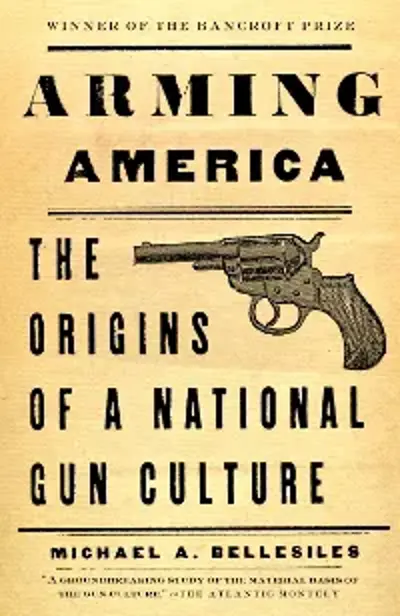
Arming America: The Origins of a National Gun Culture is a discredited 2000 book by historian Michael A. Bellesiles about American gun culture, an expansion of a 1996 article he published in the Journal of American History. Bellesiles, then a professor at Emory University, used fabricated research to argue that during the early period of US history, guns were uncommon during peacetime and that a culture of gun ownership did not arise until the mid-nineteenth century.
