John Selden Quotes
Man’s writing has but one true sense, which is that which the Author meant when he writ it.
This quotation is often cited when issues arise about interpreting the Constitutionality of something centuries later.
John Selden, 1584-1654, British Jurist & Member of Long Parliament, 1696
Sourced by: Eigen's Political and Historical Quotations

Justice Holmes was explaining the shortcoming of taking words, spoken or written, literally and not looking further to try and determine the actual intent. This becomes a major legal issue when trying to determine the original intent of legislators of the framers of the Constitution. We all have written things which when interpreted to by others end up with a meaning different from what we intended. In the legislative process with the negotiations over wording, committees, and tradeoffs, it is often very hard to determine what the originators had in mind for in many situations they disagreed about the issue but ended up compromising on some specific language which might represent a consensus or might not even represent anyone’s view.


Every time a court decides on the constitutionality of something that did not exist at the founding, the meaning is enlarged somewhat. For example is hacking into a computer a violation of the Due Process clause? Are Americans who are entitled to bear arms allowed to choose any arms now existent—ie biological weapons? Is a President who is brain dead but is breathing and kept alive by artificial means to be replaced by the Vice President? The U.S. Constitution is the oldest constitution of all the industrialized democracies, and yet if functions in a world the Founding Fathers would not recognize. The courts and the Amendments have kept it fundamental to our nation and still an example to the world.


This Cahier was the consensus of the Clergy of Blois in 1789. There were cahiers of several provinces of France—some by the clergy, some by the nobles. What is fascinating is the emergence of many of the pre-revolutionary French concepts. The example of the American revolution and its principles was known throughout the educated classes of France.


Generally we make laws to try and stop bad actions. Without the bad actions, there would generally be no laws.

For complex legislation, there are very few members of Congress who vote on the legislation who could honestly say that they have read the entire bill. Breyer and many others do not see this as a major problem; many others consider it a disgrace that members of Congress will vote for or against a law that they have not even read.

Many new laws have unintended consequences. In many cases the laws are not sufficiently effective to solve the problems for which they were passed. In other cases, the laws are too draconian and the public and the legislators have second thoughts. Almost all laws of significance require amendments and adjustments over the years.
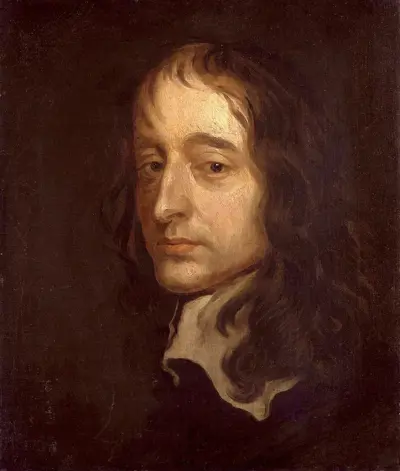
John Selden was an English jurist, a scholar of England's ancient laws and constitution and scholar of Jewish law. He was known as a polymath; John Milton hailed Selden in 1644 as "the chief of learned men reputed in this land."
