Earl Warren Quotes
We will pass on a document will not have exactly the same meaning it had when we received it from our fathers.
Every time a court decides on the constitutionality of something that did not exist at the founding, the meaning is enlarged somewhat. For example is hacking into a computer a violation of the Due Process clause? Are Americans who are entitled to bear arms allowed to choose any arms now existent—ie biological weapons? Is a President who is brain dead but is breathing and kept alive by artificial means to be replaced by the Vice President? The U.S. Constitution is the oldest constitution of all the industrialized democracies, and yet if functions in a world the Founding Fathers would not recognize. The courts and the Amendments have kept it fundamental to our nation and still an example to the world.
Earl Warren, 1891-1974, Chief Justice, U.S. Supreme Court, Governor of California (Republican), Republican Vice Presidential Candidate (with Dewey), Referring to the Bill of Rights as it has been interpreted by the courts over the years, Quoted in G. Edward White, Earl Warren: A Public Life, 1982
Sourced by: Eigen's Political and Historical Quotations


Justice Holmes was explaining the shortcoming of taking words, spoken or written, literally and not looking further to try and determine the actual intent. This becomes a major legal issue when trying to determine the original intent of legislators of the framers of the Constitution. We all have written things which when interpreted to by others end up with a meaning different from what we intended. In the legislative process with the negotiations over wording, committees, and tradeoffs, it is often very hard to determine what the originators had in mind for in many situations they disagreed about the issue but ended up compromising on some specific language which might represent a consensus or might not even represent anyone’s view.

This quotation is often cited when issues arise about interpreting the Constitutionality of something centuries later.


The Grammar Curmudgeon. This is one side of a fundamental argument within America as to the Constitution. The other side argues that the original intent of the Founding Fathers should prevail. That their principles are what has made America great, and we do not want to deviate from those. In determining Constitutionality, it is the original intent that should prevail even if the issues are ones of which the founding fathers had no inkling such as the ability of a nuclear power to destroy much of the nation before Congress could be called into session or that police could use geo-positioning devices to track the movement of citizens. Or that women could prove themselves the equal of (or superior to) in intellectual pursuits and would want to participate in politics and policy making.


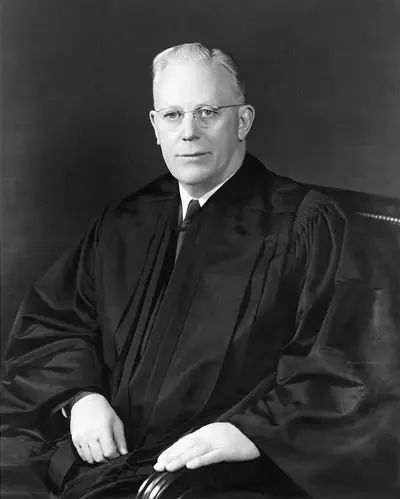
Earl Warren was an American politician and jurist who served as 30th governor of California from 1943 to 1953 and Chief Justice of the United States from 1953 to 1969. The "Warren Court" presided over a major shift in American constitutional jurisprudence, which has been recognized by many as a "Constitutional Revolution" in the liberal direction, with Warren writing the majority opinions in landmark cases such as Brown v. Board of Education (1954), Reynolds v. Sims (1964), Miranda v. Arizona (1966) and Loving v. Virginia (1967). Warren also led the Warren Commission, a presidential commission that investigated the 1963 assassination of President John F. Kennedy. He is the last chief justice to have served in an elected office before entering the Supreme Court, and is generally considered to be one of the most influential Supreme Court justices and political leaders in the history of the United States.
