James Iredell Quotes
We are too apt, in estimating a law passed at a remote period, to combine in our consideration, all the subsequent events which have had an influence upon it, instead of confining ourselves (which we ought to do) to the existing circumstances at the time of its passing.
James Iredell, 1751–1799, U. S. Justice of the Supreme Court, Ware v. Hylton, 1796
Sourced by: Eigen's Political and Historical Quotations


Justice Holmes was explaining the shortcoming of taking words, spoken or written, literally and not looking further to try and determine the actual intent. This becomes a major legal issue when trying to determine the original intent of legislators of the framers of the Constitution. We all have written things which when interpreted to by others end up with a meaning different from what we intended. In the legislative process with the negotiations over wording, committees, and tradeoffs, it is often very hard to determine what the originators had in mind for in many situations they disagreed about the issue but ended up compromising on some specific language which might represent a consensus or might not even represent anyone’s view.


This quotation is often cited when issues arise about interpreting the Constitutionality of something centuries later.


There are some Americans who believe that the courts should look to the original intent of the framers of the Constitution to determine the constitutionality of a law. Most jurists believe that original intent is but one factor that should influence the decision.


Every time a court decides on the constitutionality of something that did not exist at the founding, the meaning is enlarged somewhat. For example is hacking into a computer a violation of the Due Process clause? Are Americans who are entitled to bear arms allowed to choose any arms now existent—ie biological weapons? Is a President who is brain dead but is breathing and kept alive by artificial means to be replaced by the Vice President? The U.S. Constitution is the oldest constitution of all the industrialized democracies, and yet if functions in a world the Founding Fathers would not recognize. The courts and the Amendments have kept it fundamental to our nation and still an example to the world.
From this quotation, {615902} and {615901} it is clear that the framers of the Constitution intended the treaty making powers to be shared by the President and the Senate. In practice, in modern times treaties are usually initially negotiated by diplomats under the supervision of the President and the Senate gets to concur or not in the ratification process. However, there have been a number of treaty failures including the League of Nations where the lack of coordination has resulted in a situation where the Senate had to accept or reject something which the President had negotiated and the Senate rejected the treaty.


At the time, Spain was one of the most backward countries in Europe. They were still executing people for heresy and blasphemy.


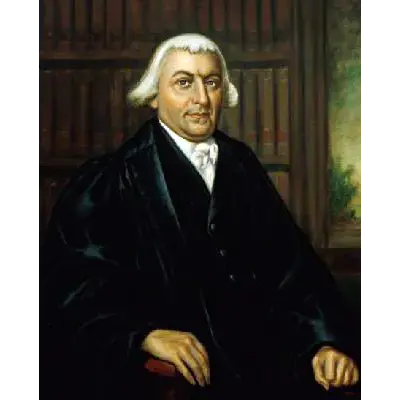
James Iredell was one of the first Justices of the Supreme Court of the United States. He was appointed by President George Washington and served from 1790 until his death in 1799. His son, James Iredell Jr., was a Governor of North Carolina.
