Alexander Addison Quotes
Man must have an idol, and our political idol ought to be our constitution and laws. They, like the ark of the covenant among the Jews, ought to be sacred from all profane touch.
Alexander Addison, ?-1807, Pennsylvania Judge, Declared in Pennsylvania, 1791, Quoted by Adam Zamoyski in “Holy Madness: Romantics, Patriots, and Revolutionaries, 1776-1781”
Sourced by: Eigen's Political and Historical Quotations


One of the conundrums of our constitutional system is who has the last word as to what the Constitution means. Essentially it is the judicial branch headed by the Supreme Court. But there are those who believe that the current popular majority should have a say in what is or is not constitutional. If so the legislative branch should have the last word. Still others say that the President is the only person elected by ALL the people, so his opinion most reflects the will of the public. And then there are most who argue that the Constitutional system was created just to avoid the power of currently popular majorities, and the courts should decide based on the Constitution itself. So the statement has very little meaning except that Phillips thinks that the courts have too much power. Whoever gets to decide what is or is not Constitutional will be accused of being “over” the Constitution by those who don’t like the decisions. In our system, that is the courts.


See John Marshall's later (1803) use of the concept and term "repugnant." {606483}

On the Fugitive Slave Act: As one of the leading American Catholic intellectuals during the 19th Century, Brownson’s opinions went far in keeping Catholics from joining the side of the abolitionists. However, just a few years later his tone would change and he would become one of the few Catholic writers to refuse to defend slavery, see {610710}. While the majority of Catholics refused to join the abolition movement, they often did so because abolitionism was closely tied to anti-Catholicism, see Gordon {611392} or Shaftesbury {611106}. Other reasons included Irish immigrants fearful of competition from Black labor and the fear of liberal individualism and social disorder, which was prevalent in 19th century Catholic thought. For a further explanation on the relationship between American Catholics and slavery, see McGreevy {612036}.

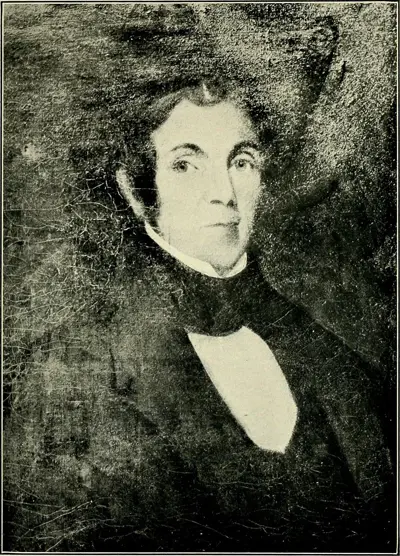
Alexander Addison (1758–1807) was the first judge appointed to the position of president judge of the Fifth Judicial District of Pennsylvania-the area encompassing most of Western Pennsylvania of the newly formed United States of America.
