John F. Kennedy Quotes
Lyndon takes more of the Catholic flavor off me. Second, he would help in the South. Third, it wouldn't be worthwhile being President if Lyndon were the Majority Leader.
John F. Kennedy, 1917-1963, 35th President of the United States (Democrat, MA), Explanation of why Kennedy wanted Lyndon B. Johnson as his Vice Presidential running mate in 1960, Quoted in John Kenneth Galbraith, 1908–2006, 1908–2006, Name Dropping From FDR On, 1999
Sourced by: Eigen's Political and Historical Quotations


He was right. Even the vaunted Southern Filibuster was broken by the strategy and tactics Johnson and Senator Humbert Humphry, the Floor Leader for the 1964 Civil Rights Bill.


JFK was running for the Presidency and was Roman Catholic. There was a great deal of anti-Catholic prejudice in the country with many people fearing that a Catholic President would mean Papal control of the United States. Peale was the most influential American clergyman of the day, and while he did not overtly oppose the Kennedy candidacy, he did state that he thought the election of a Catholic would profoundly change America. Kennedy won by a thin margin, but none of the events that the anti-Catholics feared, came to pass.

He was alluding to Matthew 7:7; Luke 11:9, 12:31

Moyers was also an ordained Baptist Minister. At a White House dinner, Moyers was asked to say grace. He did so in a soft and reverent voice. President Johnson, seated far away, and not hearing Moyers words clearly said in a loud voice, “Speak up, Bill. Speak up.” Moyer’s response followed.

McLendon was representing the San Antonio Light and was in part defending the Texas minority leader. But as time would tell, LBJ would be the most powerful and influential speaker in Senate history, even at such a young age.


This advice has been taken by many elected Presidents and Prime Ministers in a democracy beginning a new administration. Essentially it is delay and “kick the can down the road”.
His role was the equivalent of the Mayor of Washington DC.


Explaining his resignation as CIA Director

LBJ was depressed and thinking of not running for re-election.
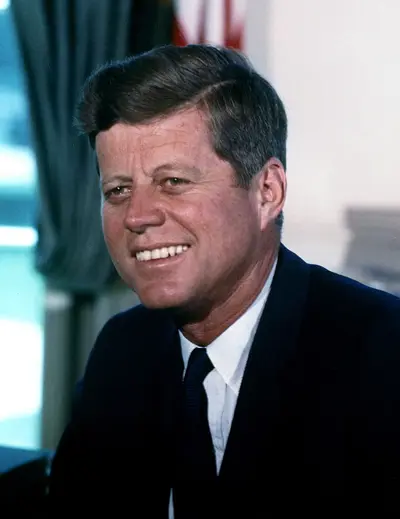
John Fitzgerald Kennedy, often referred to by his initials JFK, was an American politician who served as the 35th president of the United States from 1961 until his assassination in 1963. Kennedy served at the height of the Cold War, and the majority of his work as president concerned relations with the Soviet Union and Cuba. A Democrat, Kennedy represented Massachusetts in both houses of the U.S. Congress prior to becoming president.
