James R. Clapper Quotes
Looking back over my more than a half century in intelligence, I have not experienced a time when we've been beset by more crises and threats around the globe.
Testimony, Senate Select Committee on Intelligence, January 29, 2014
Sourced by: Eigen's Political and Historical Quotations


What he does not consider is that a large number of Americans don’t want their government having grand strategies if there is no threat to the United States or no critical national interest. For them crises and threats are all that should occupy our foreign affairs.


The argument here is that secret intelligence, comes from sources and people whose views and claims are not subject to the test of public scrutiny representing a narrow information sample. Publicly available information, while it does not include secrets that the enemy wants to keep secret, does represent vetted and processed information with challenges and contradictions also publicly available. Proponents argue that it is more reliable. Secret intelligence has produced some of America’s worst debacles. An example is the Bay of Pigs. Secret intelligence assured Presidents Eisenhower and Kennedy that the majority of Cuban people was hostile to the Fidel Castro government. If freedom fighters would land in Cuba, the vast majority of Cubans would join them. When the invaders landed, most Cubans were so outraged that their country was being invaded that there was massive public support for Castro’s troops who quickly captured the invaders who were waiting for the popular uprising.
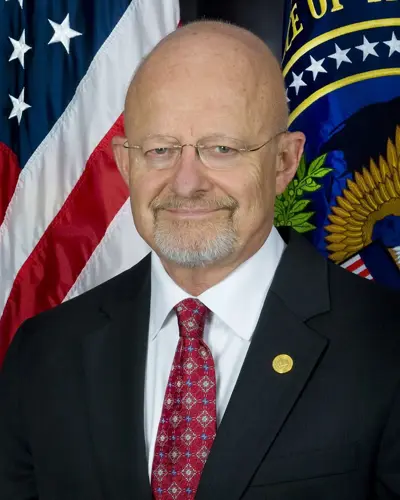
James Robert Clapper Jr. is a retired lieutenant general in the United States Air Force and is the former Director of National Intelligence. Clapper has held several key positions within the United States Intelligence Community. He served as director of the Defense Intelligence Agency (DIA) from 1992 until 1995. He was the first director of defense intelligence within the Office of the Director of National Intelligence and simultaneously the Under Secretary of Defense for Intelligence. He served as the director of the National Geospatial-Intelligence Agency (NGA) from September 2001 until June 2006.
