Joan van der Capellen tot den Pol Quotes
Liberty and an unarmed people stand in direct contradiction.
Note that this was 4 years before the American Constitutional Convention and even longer before the American debate over the Bill of Rights and the 2nd Amendment. But, the importance of the right to bear arms was not an American invention. Van der Capellen was talking about it and writing about it before the Americans considered it. It is not known whether or not any of the Americans knew about van der Capellen and his view on citizen armament.
Joan van der Capellen tot den Pol, 1741-1784,, Dutch Nobleman & Republican Revolutionary Patriot, Political Writer, Letter to de Gijselaar, 1783
Sourced by: Eigen's Political and Historical Quotations

It would be more than a decade before the phrase “well regulated militia” would be added into the Constitution as the 2nd Amendment of the Bill of Rights. This resolution was the last of several passed at this meeting by which Maryland endorsed resistance to the British. So these resolations would have been widely distributed throughout the colonies and known by the leaders. In 1788 Alexander Hamilton Published Federalist 29 which also used the phrase. (See {588393}.) Then on September 25, 1789, the Congress proposed the Bill of Rights and the 2nd Amendment using the same key phrase, “well regulated militia.” Whether the drafters of the 2nd Amendment got the phrase from Hamilton’s Federalist 29 or from the Maryland Resolutions is not known but Hamilton’s was much more current. Did he get the phrase from Maryland? Did Congress get it from him? Did Maryland originate the phrase or was there an earlier use that influenced the Maryland drafters? At this point no one is sure, but the phrase is critical to the meaning of the 2nd Amendment because the Supreme Court has repeatedly held that the Second Amandment does not apply to individuals but only to the State’s right to bear arms within the “well regulated militia” and not as individual citizens. The right is that of the State government and that is why a state can control guns including banning them if they choose. So an individual in America does not have the constitutional right to bear arms. He may have a state constitutional right but in other states he may not use a gun in certain places and may not possess certain types of guns like hand guns which are illegal in New York, Washington DC and some other places.


Stalin did not want any political opposition with its own militia. American gun control opponents often cite this quotation to show that in Russia, Stalin achieved dictatorial power by disarming the population in general and only allowing government officials to have guns. They argue that even Stalin could not have tyrannized the entire Soviet Union if every citizen had the right to bear arms as provided for by the Second Amendment.


At that time, ideology was not a driving political force and individual politicians often were hard to classify. For example, Humphrey was at the far left—an ultra liberal. Yet he was a staunch advocate of the right to bear arms. 50 years later there were no liberals who did not want to restrict gun ownership, And at that time, many Republicans were advocates of gun control, an unheard of situation in the 21st century beginning.


Although written by a science fiction writer, this is one of the best quotations arguing for widespread gun ownership.


The “New World Order” is a “secret organization” which a number of conspiracy theorists believe is running much of the world behind the scenes and is planning to disarm all Americans as an early step in the takeover of America so they can have a dictatorial one world government. Jones is one of those believers.

The Southern Rebels who insisted on their right to have guns during Reconstruction, viciously denied that same right to the newly freed slaves. Sickles tried to remedy this, but the KKK and other terrorists intimidated most of the Blacks into not using the right that they had. Later, they would do that with the right to vote.


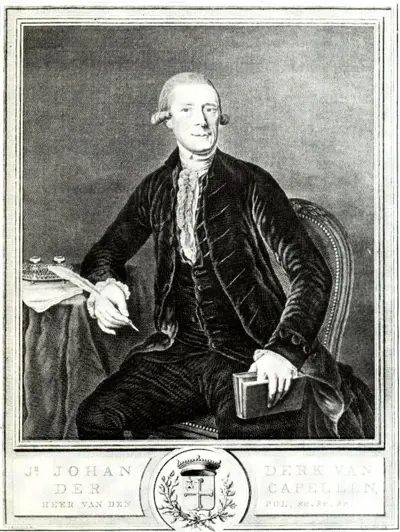
Joan Derk, Baron van der Capellen tot den Pol was a Dutch nobleman who played a prominent role in the revolutionary events that preceded the formation of the Batavian Republic. As a member of the Patriots and inspired by the American Revolution, he wrote the noted pamphlet Aan het Volk van Nederland ("To the People of the Netherlands"), pleading for a more liberal society and the end of the Stadtholder regime, which had been marked by corruption and nepotism. He was also an ardent supporter of the legal recognition of the recently created United States of America.
