John Stuart Mill Quotes
Levying the taxes … does not impede the industry, or unnecessarily interfere with the liberty, of the citizen, promotes, not the preservation only, but the increase of the national wealth, and encourages a more active use of the individual faculties.
John Stuart Mill, 1806-1873, Member of Parliament, British Political Economist, Representative Government, 1861
Sourced by: Eigen's Political and Historical Quotations


This has long been a principle of most politicians responsible for taxation and national budgets. A forced loan, was a practice where instead of taxing and industry like banks, the government requires that the loan the government a certain amount which the government pays back with interest. For the banker, this is preferable to a bank tax which he will never get back,, but then the interest has to be paid by everyone. If the benefit or its potential is to accrue to all citizens, then all the citizens should share in the burden—hence general taxes. See {639883} for a similar contemporary view.


The traditional conservative tax principle has always been that low tax rates are needed to produce economic expansion and in general this had been so until Clinton and Rubin combined higher tax rates with great fiscal discipline of government spending and low interest rates, not only produced a great economic expansion but eliminated the Reagan deficit and left office with a huge projected surplus.


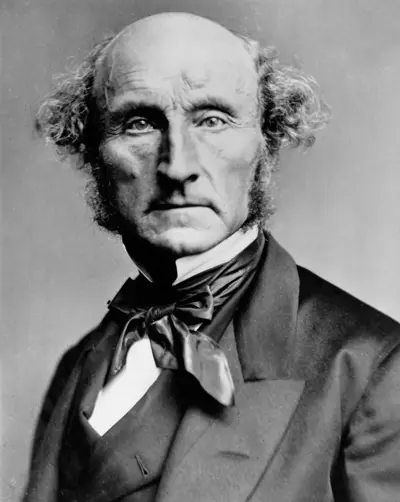
John Stuart Mill, usually cited as J. S. Mill, was an English philosopher, political economist, Member of Parliament, and civil servant. One of the most influential thinkers in the history of classical liberalism, he contributed widely to social theory, political theory, and political economy. Dubbed "the most influential English-speaking philosopher of the nineteenth century", he conceived of liberty as justifying the freedom of the individual in opposition to unlimited state and social control.
