Noam Chomsky Quotes
Let's take Southeast Asia. The last 20, 30 years has been what's called the "Asian Miracle" - fast economic growth, industrial society. It's happening all over, with one exception, which one? The Philippines is the one that can't grow, which the US has been running for 100 years. Is there a correlation? Have you read about it? It comes to mind, at least.
Chomsky, Noam. Understanding Power: The Indispensable Chomsky. Edited by Peter R. Mitchell and John Schoeffel, The New Press, 2002.


This was an incredible prediction that few people thought was possible. This speech was given in the early days of WWII when it was far from clear that we would win.


Boot argues that there are conditions which tend to foster technological development. Nations which are political unstable, or theocracies, rural, or suffering from food shortages have rarely developed much technology.

After Turkey’s defeat in WWI, some Turkish leaders like Riza Nur wanted Turkey to become a colony of America. This they believed would hasten Turkey’s development and modernization.

The relationship of population increase economic growth is a critical one. If an underdeveloped country manages to have a 3% annual economic growth rate and also has a 3.2% population growth, at the end of the year, the average person is actually poorer than he was the previous year. South Korea, China, Thailand and India implemented successful population control and family planning programs before they were able to take advantage of economic development. To modernize, the country must be able to have a surplus of funds which can be invested in roads, schools, hospitals, and other facilities which can produce even more growth later. Too many new mouths to feed, clothe and care for can be a barrier to development even if the economy is reasonably good.


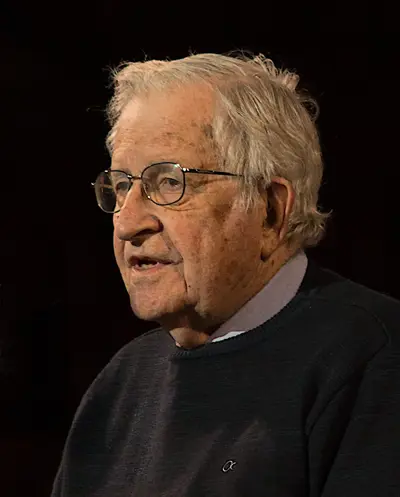
Avram Noam Chomsky is an American linguist, philosopher, cognitive scientist, historian, social critic, and political activist. Sometimes called "the father of modern linguistics", Chomsky is also a major figure in analytic philosophy and one of the founders of the field of cognitive science. He is Laureate Professor of Linguistics at the University of Arizona and Institute Professor Emeritus at the Massachusetts Institute of Technology (MIT), and is the author of more than 150 books on topics such as linguistics, war, politics, and mass media. Ideologically, he aligns with anarcho-syndicalism and libertarian socialism.
