Benjamin N. Cardozo Quotes
Lawsuits are rare and catastrophic experiences for the vast majority of men, and even when the catastrophe ensues, the controversy relates most often not to the law, but to the facts. In countless litigations, the law Is so clear that judges have no discretion.
Cardozo, Benjamin N. The Nature of the Judicial Process. Yale University Press, 1921, p. 128.


Explaining why she would not answer hypothetical cases posed to her by senators:. She also refused to comment on concrete cases on the ground that these issues may soon come before the court.


Ever since that decision was written, lawmakers, judges and attorneys have worked very hard to minimize its impact and allow the jury to only decide on the facts and not the law. Only Maryland today preserves the right of the jury to decide what the law means and to judge it. Authorities, even democratic ones, do all they can to prevent what is called “jury nullification”. Regardless, juries often exercise that right regardless of the judge’s instructions.


This is one of the earliest American articulation of the 12 man jury.


Islam was not very strong at this point and the followers of Muhammad were relatively few and Medina area contained Arab Non-Believers, Jews as well as the new Muslims. Muhammad drew up this document and got the non Muslims to agree to it. What is fascinating is that they bought into the idea that Muhammad would be the judge and final arbitrator of all disputes that were not resolved locally. The non Muslims agreed to this because Muhammad had been judging disputes for several years for those who would submit their cases to them. In a time of inconsistency, corruption, capriciousness and arbitrariness, Muhammad had developed a remarkable reputation for fairness, consistency, objectivity, and complete honesty. He could not be bought as most judges were at the time. He simply had demonstrated that he was the best man for the job.


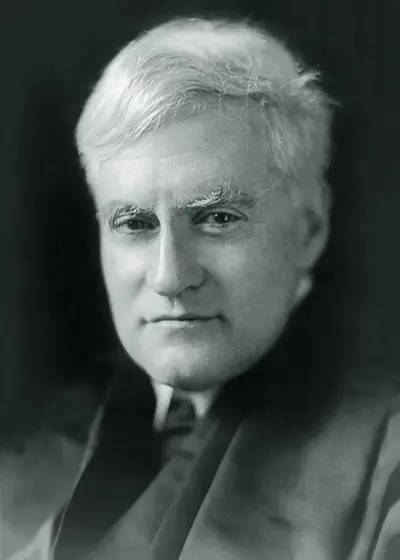
Benjamin Nathan Cardozo was an American jurist who served on the New York Court of Appeals and later as an Associate Justice of the Supreme Court. Cardozo is remembered for his significant influence on the development of American common law in the 20th century, in addition to his philosophy and vivid prose style. Cardozo served on the Supreme Court six years, from 1932 until his death in 1938. Many of his landmark decisions were delivered during his eighteen-year tenure on the New York Court of Appeals, the highest court of that state.
