Aeschylus Quotes
ATHENA: There are two sides to this dispute. I've heard only one half the argument. (...) So you two parties, summon your witnesses, set out your proofs, with sworn evidence to back your stories. Once I've picked the finest men in Athens, I'll return. They'll rule fairly in this case, bound by a sworn oath to act with justice.
Aeschylus. The Eumenides. The Oresteia. Translated by Robert Fagles, Penguin Books, 1979, p. 250.


Explaining why she would not answer hypothetical cases posed to her by senators:. She also refused to comment on concrete cases on the ground that these issues may soon come before the court.


Deseret was the “state” that had been established by the Mormons in Utah. What is particularly interesting about this quotation is that pioneers traveling to California and Washington and passing through the Mormon territory availed themselves of the Mormon Civil Court system.

Islam was not very strong at this point and the followers of Muhammad were relatively few and Medina area contained Arab Non-Believers, Jews as well as the new Muslims. Muhammad drew up this document and got the non Muslims to agree to it. What is fascinating is that they bought into the idea that Muhammad would be the judge and final arbitrator of all disputes that were not resolved locally. The non Muslims agreed to this because Muhammad had been judging disputes for several years for those who would submit their cases to them. In a time of inconsistency, corruption, capriciousness and arbitrariness, Muhammad had developed a remarkable reputation for fairness, consistency, objectivity, and complete honesty. He could not be bought as most judges were at the time. He simply had demonstrated that he was the best man for the job.


It would be wonderful of polarized American politicians these days had taken Professor Smyth’s course, and paid heed to his advice. But few politicians in either England or America function as if they believe this basic principle of human nature.


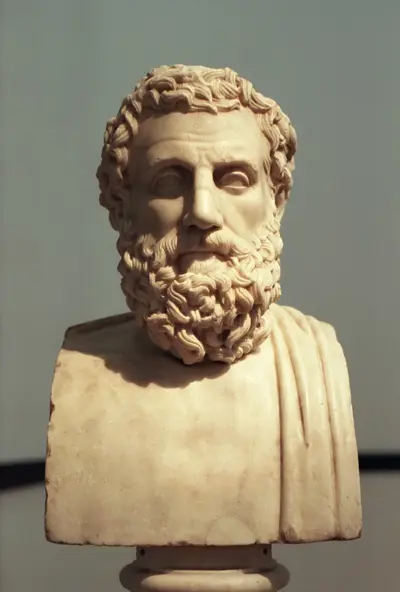
Aeschylus (UK: /ˈiːskɪləs/, US: /ˈɛskɪləs/; Greek: Αἰσχύλος Aiskhylos, pronounced [ai̯s.kʰý.los]; c. 525/524 – c. 456/455 BC) was an ancient Greek author of Greek tragedy, and is often described as the father of tragedy. Academics' knowledge of the genre begins with his work, and understanding of earlier Greek tragedy is largely based on inferences made from reading his surviving plays. According to Aristotle, he expanded the number of characters in the theatre and allowed conflict among them. Before this, characters interacted only with the chorus.
