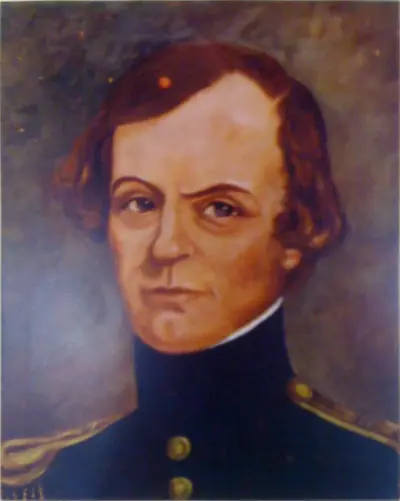
John W. Gunnison Quotes
Of the parties organized in the States to cross the plains there was hardly one that did not break into fragments and the division of property caused a great deal of difficulty. Many of these litigants applied to the courts of Deseret for redress of grievances, and there was every appearance of impartiality and strict justice done to all parties
Deseret was the “state” that had been established by the Mormons in Utah. What is particularly interesting about this quotation is that pioneers traveling to California and Washington and passing through the Mormon territory availed themselves of the Mormon Civil Court system.
John W. Gunnison, 1812-1853, Explorer & U. S. Army Surveyor, Report About The State of Deseret, 1850
Sourced by: Eigen's Political and Historical Quotations


Some democratic cultures are very distrustful of government bureaucracies and prefer to resolve conflicts through the courts where the process in in general much more transparent. The U. S. is not the only example. Israel is even more litigious.

See {610613} for Attila’s criticism to which he was responding.


Manava Dharma Shastra. Here is a type of Freedom of Information Act in Ancient India. This text is a part of the Hindu Holy Texts. Hindus believe that Manu was a prophet whose text is revealed or inspired.
Manava Dharma Shastra. The Hindu caste system is one of the most brutal and rigid forms of discrimination in human history. It is interesting to note that even the lowest cast people—the “untouchables”—were thought worthy of being witnesses. In early America, in many places Native Americans and Blacks were not considered fit to be witnesses even though they were free and not slaves. This “liberality” did not apply to women however where even the highest caste was not considered fit for the function. This text is a part of the Hindu Holy Texts. Hindus believe that Manu was a prophet whose text is revealed or inspired.


A case of systemic racial discrimination against a Bank of America subsidiary which she had initiated in 2008 had been resolved by the Bank paying over $200 million to the victims.


Islam was not very strong at this point and the followers of Muhammad were relatively few and Medina area contained Arab Non-Believers, Jews as well as the new Muslims. Muhammad drew up this document and got the non Muslims to agree to it. What is fascinating is that they bought into the idea that Muhammad would be the judge and final arbitrator of all disputes that were not resolved locally. The non Muslims agreed to this because Muhammad had been judging disputes for several years for those who would submit their cases to them. In a time of inconsistency, corruption, capriciousness and arbitrariness, Muhammad had developed a remarkable reputation for fairness, consistency, objectivity, and complete honesty. He could not be bought as most judges were at the time. He simply had demonstrated that he was the best man for the job.