Wilkie Collins Quotes
The law will argue anything, with anybody who will pay the law for the use of its brains and its time.
Wilkie Collins, 1824–1889, English Novelist & Playwright, Man and Wife
Sourced by: Eigen's Political and Historical Quotations


He was reacting to the fact that in the George W. Bush administration, they found a few lawyers in the Justice Department that they put into key positions and they wrote legal opinions stating that many commonly used forms of torture were not torture and therefore were legal. Of course the legal opinion was secret so other lawyers could not fault it, and the CIA actually used that as justification for the torture of some of the enemy combatants in the War on Terror.


Some democratic cultures are very distrustful of government bureaucracies and prefer to resolve conflicts through the courts where the process in in general much more transparent. The U. S. is not the only example. Israel is even more litigious.


Americans are divided as to whether this should be encouraged and helped or not.


This is one of the first attempts to decentralize the system of law and justice. Edgar was very supportive and tolerant of local differences and customs, including in the law.

Baker led the legal team for George W. Bush and had filed numerous lawsuits including to the U. S. Supreme Court.

Deseret was the “state” that had been established by the Mormons in Utah. What is particularly interesting about this quotation is that pioneers traveling to California and Washington and passing through the Mormon territory availed themselves of the Mormon Civil Court system.

Manava Dharma Shastra. Here is a type of Freedom of Information Act in Ancient India. This text is a part of the Hindu Holy Texts. Hindus believe that Manu was a prophet whose text is revealed or inspired.

Bruce is one of the few American Comedians to so offend the political establishment that he was constantly legally harassed throughout his career. He was actually criminally convicted in New York for obscenity. In 2003 he was posthumously pardoned by the New York Governor, the first posthumous pardon in state history.


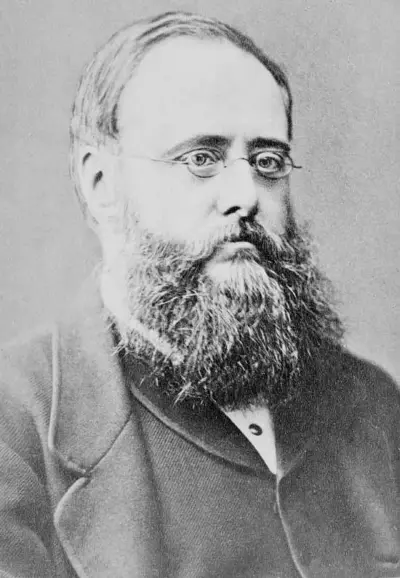
William Wilkie Collins was an English novelist and playwright known for The Woman in White (1859), and for The Moonstone (1868), which has been called the first modern English detective novel. Born to the London painter William Collins and his wife, the family moved to Italy when Collins was twelve, living there and in France for two years, which allowed the author to learn Italian and French. He worked initially as a tea merchant. After publishing Antonina, his first novel, in 1850, Collins met Charles Dickens, who became a friend and mentor. Some Collins works first appeared in Dickens's journals Household Words and All the Year Round. The two also collaborated on drama and fiction. Collins gained financial stability and an international following by the 1860s, but began to suffer from gout. He took opium for the pain, but became addicted to it. His health and his writing quality then declined in the 1870s and 1880s. Collins was critical of the institution of marriage: he split his time between widow Caroline Graves – living with her for most of his adult life, treating her daughter as his – and the younger Martha Rudd, by whom he had three children.
